
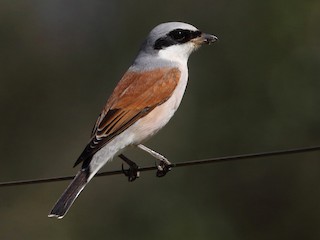
Dove vive Red-backed Shrike?
Lanius collurio
Visto un uccello? Identificalo all'istante con l'app Birdby
Apri l'appRed-backed Shrike vive in habitat e regioni specifiche. Sapere dove e quando guardare migliora le possibilità di un avvistamento riuscito.
Biomi
Temperate grasslands, shrublands, open woodlands, agricultural land
Areale geografico
Breeds across most of Europe (excluding the British Isles, Iceland, and parts of Scandinavia) and western Asia. Winters in southern Africa, primarily in the savanna and bushveld regions.
Ambienti preferiti
Prefers open, mosaic landscapes with scattered thorny bushes, hedges, scrub, and small trees, often near meadows or pastures. Requires suitable perches for hunting and thorny vegetation for impaling prey.
Fascia altitudinale
Typically found from sea level up to 2000 meters, occasionally higher in mountainous regions.
Dove guardare
Scrublands and Hedges
Look in areas with dense thorny bushes, hawthorn hedges, and scattered small trees, which provide both hunting perches and nesting sites.
Open Woodlands and Forest Edges
Often found at the edges of deciduous or mixed woodlands, particularly where they border open fields or clearings.
Agricultural Landscapes
Common in traditional agricultural areas with hedgerows, pastures, and fallow fields, especially those with minimal pesticide use.
Power Lines and Fences
These provide excellent elevated perches for hunting, so check wires and fence lines in suitable habitats.
Consigli sul campo
- Look for prominent perches. Red-backed Shrikes often perch conspicuously on the tops of bushes, small trees, fence posts, or power lines while scanning for prey.
- Listen for their song. Their melodious, warbling song, often with mimicry, can draw attention to their presence, especially during the breeding season.
- Observe hunting behavior. Watch for their characteristic swooping flights from a perch to catch insects on the ground, and look for 'larders' of impaled prey.
- Visit during migration. During spring (April-May) and autumn (August-September) migration, they can be seen in a wider range of habitats as they pass through.
- Use binoculars. Their relatively small size and often distant perches make binoculars essential for observing plumage details and behavior.
Migrazione
Long-distance migratory. Arrives on breeding grounds in April-May and departs for wintering grounds in August-September. The migration route is broad-front, often crossing the Mediterranean Sea and the Sahara Desert.
Esplora Red-backed Shrike
Identifica uccelli ovunque
Gratis su iOS, Android e Web. Identificazione per foto e suono, database completo e la tua lista personale.