
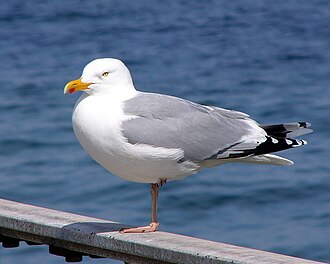
Dove vive European Herring Gull?
Larus argentatus
Visto un uccello? Identificalo all'istante con l'app Birdby
Apri l'appEuropean Herring Gull vive in habitat e regioni specifiche. Sapere dove e quando guardare migliora le possibilità di un avvistamento riuscito.
Biomi
Coastal areas, estuaries, large inland lakes, rivers, agricultural land, urban environments, landfills.
Areale geografico
Widespread across the North Atlantic, including Europe, Scandinavia, Iceland, and parts of North America (where it is often considered a subspecies or closely related species, Larus smithsonianus). Its range extends from the Arctic to temperate zones.
Ambienti preferiti
Rocky coasts, sandy beaches, cliffs, islands, harbors, fishing ports, estuaries, agricultural fields, urban rooftops, and landfills.
Fascia altitudinale
Primarily sea level to low elevations, though can be found at higher altitudes when foraging inland.
Dove guardare
Coastal Areas
Look along rocky shores, sandy beaches, cliffs, estuaries, and harbors. They are common near fishing boats and fish markets.
Urban Environments
Increasingly found in cities, nesting on rooftops and scavenging in parks, streets, and waste disposal sites.
Agricultural Land
Often seen following plows or foraging in fields for invertebrates and small mammals, especially inland.
Landfills and Waste Sites
A common and often dominant species at landfills, where they scavenge for discarded food.
Consigli sul campo
- Observe Behavior. Watch their feeding habits; their opportunistic scavenging is a good indicator. They are often bold and accustomed to human presence.
- Listen for Calls. Their loud and distinctive calls are often heard before the bird is seen, especially in coastal or urban areas.
- Check for Age. Pay attention to plumage variations to determine age. Juvenile and immature birds can look quite different from adults.
- Compare with other Gulls. In areas where multiple gull species coexist, carefully compare leg color, mantle shade, and wingtip patterns to differentiate them.
Migrazione
Partial migrant. Northern populations are migratory, moving south to ice-free coasts in winter. Southern populations are largely resident or undertake short-distance dispersal. Juveniles tend to disperse more widely than adults.
Esplora European Herring Gull
Identifica uccelli ovunque
Gratis su iOS, Android e Web. Identificazione per foto e suono, database completo e la tua lista personale.