
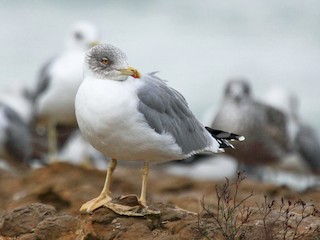
Dove vive Yellow-legged Gull?
Larus michahellis
Visto un uccello? Identificalo all'istante con l'app Birdby
Apri l'appYellow-legged Gull vive in habitat e regioni specifiche. Sapere dove e quando guardare migliora le possibilità di un avvistamento riuscito.
Biomi
Coastal areas, marine environments, estuaries, large rivers, lakes, urban areas, agricultural land, landfills.
Areale geografico
Primarily the Mediterranean Basin, extending northwards along the Atlantic coasts of Europe (France, Portugal, Spain) and into Central Europe along major rivers. Also found in parts of the Black Sea and occasionally further east. Expanding its range northwards.
Ambienti preferiti
Rocky coasts, islands, cliffs for nesting; sandy beaches, estuaries, harbors, fishing ports, urban centers, landfills, and agricultural fields for foraging.
Fascia altitudinale
Sea level to low-lying inland areas, occasionally found at higher altitudes when foraging.
Dove guardare
Coastal Areas
Look along rocky shores, cliffs, sandy beaches, estuaries, and harbors throughout the Mediterranean and Atlantic coasts of Europe.
Urban Environments
Increasingly common in cities, especially near ports, markets, and landfills. They often nest on rooftops and forage in parks and public spaces.
Inland Water Bodies
Can be found along large rivers and lakes, particularly in Central Europe, often following waterways from coastal areas.
Landfills and Waste Sites
These are major foraging grounds, attracting large numbers of gulls, including Yellow-legged Gulls.
Consigli sul campo
- Observe Leg Color. This is often the quickest and most reliable field mark for adults. Ensure good lighting to confirm the yellow hue.
- Compare Mantle Shade. If other large gulls are present, compare the grey shade of the mantle. Yellow-legged Gulls are intermediate between Herring and Lesser Black-backed Gulls.
- Study Primary Pattern. Pay attention to the black markings and white mirrors on the wingtips, especially when the bird is in flight or resting with wings folded.
- Listen to Calls. Familiarize yourself with their distinctive deep 'laughing' call, which can help differentiate them from other large gulls even when visual cues are difficult.
- Age Identification. Be aware of the complex immature plumages. Juveniles look very different from adults and require careful observation of bill, eye, and leg color progression.
- Habitat Context. While adaptable, their primary range is the Mediterranean. Knowing the typical distribution can aid in initial identification.
Migrazione
Generally considered a partial migrant or resident. Northern populations and younger birds may undertake short-distance migrations, moving south or west from breeding grounds in winter. Mediterranean populations are largely resident, though some dispersal occurs. Increasingly, many populations are becoming more sedentary due to abundant food sources in urban environments.
Esplora Yellow-legged Gull
Identifica uccelli ovunque
Gratis su iOS, Android e Web. Identificazione per foto e suono, database completo e la tua lista personale.