
Come identificare Great Tit
Parus major
Visto un uccello? Identificalo all'istante con l'app Birdby
Apri l'appPer identificare correttamente Great Tit (Parus major), controlla ciascuna di queste caratteristiche. Gli uccelli possono essere complicati da riconoscere, perché comportamento, habitat e canto spesso confermano ciò che una sola foto non può.
Dimensioni a colpo d'occhio
- Lunghezza
- 13.5-15 cm
- Apertura alare
- 22-26 cm
- Peso
- 14-22 g
Caratteristiche fisiche da controllare
- 1
Piumaggio
Colorazione e disegno generale del piumaggio.
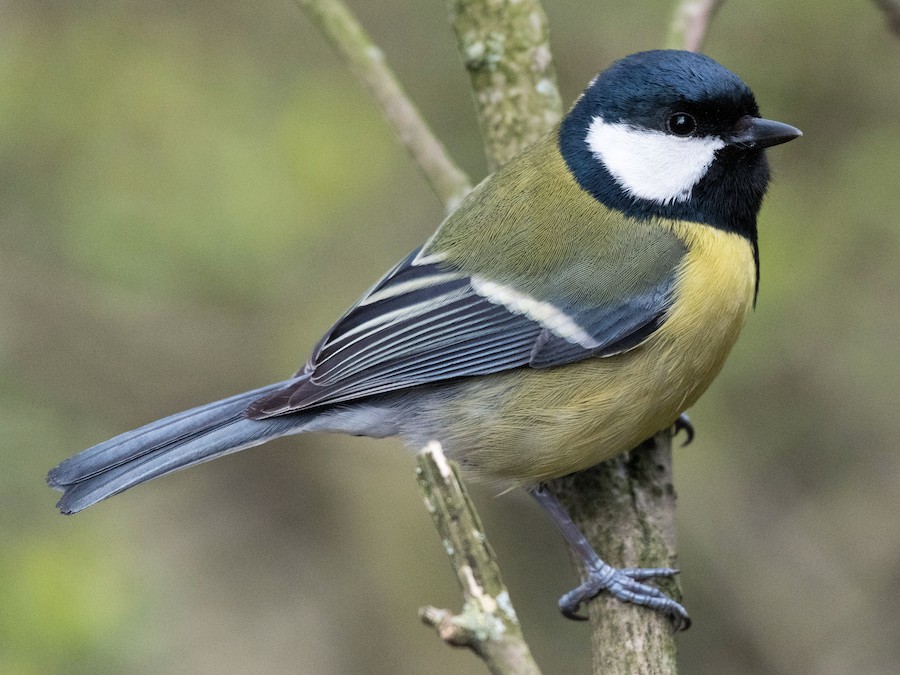
Adults have a glossy black head and nape, contrasting with prominent white cheeks. The back is olive-green, and the rump is grey-blue. The wings are grey-blue with a distinct white wing-bar. The underparts are bright yellow with a broad, glossy black stripe running from the throat down the center of the belly. The tail is grey-blue with white outer tail feathers.
- 2
Forma del becco
Forma e colore del becco, un segno di campo chiave.
Short, conical, and stout; blackish-grey in color.
- 3
Colore degli occhi
Colore dell'iride e segni distintivi sugli occhi.
Dark brown
- 4
Colore delle zampe
Colore di zampe e piedi.
Bluish-grey
- 5
Caratteristiche distintive
Tratti distintivi che separano questa specie.
The combination of a black cap, white cheeks, olive-green back, yellow underparts, and a prominent black central belly stripe is diagnostic. The white wing-bar is also a key feature.
- 6
Aspetto giovanile
Come i giovani si differenziano dagli adulti.
Juveniles are duller overall. The black areas on the head are sooty grey rather than glossy black, and the yellow underparts are paler, often with a less distinct or absent black belly stripe. The white cheek patches may be tinged yellowish.
- 7
Cambiamenti stagionali
Variazione del piumaggio tra stagione riproduttiva e non.
No significant seasonal plumage changes. Plumage may appear slightly duller due to wear towards the end of the breeding season before the annual molt.
- 8
Dimorfismo sessuale
Differenze tra maschi e femmine.
Males typically have a broader and more continuous black stripe down the belly, extending further between the legs. Females have a narrower, often broken, and less extensive black stripe. The black on the male's head can also appear glossier.
Segni di campo chiave
- Head Pattern. Look for the glossy black cap and nape, contrasting sharply with bright white cheek patches. This is a primary identifier.
- Underparts. Observe the bright yellow belly with a prominent, broad black stripe running down the center. The width and continuity of this stripe can help distinguish sex.
- Back and Wings. Note the olive-green back and grey-blue wings with a clear white wing-bar. This combination is unique among European tits.
- Size. It is the largest of the common European tits, which can be a useful comparative feature when seen alongside other tit species.
- Song. Listen for its distinctive, often two-note 'tee-cher, tee-cher' or 'pee-too, pee-too' song, which is loud and far-carrying.
- Behavior. Watch for its active foraging style, often hanging upside down, and its willingness to visit bird feeders.
Esplora Great Tit
Identifica uccelli ovunque
Gratis su iOS, Android e Web. Identificazione per foto e suono, database completo e la tua lista personale.