
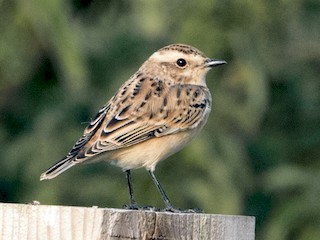
Dove vive Whinchat?
Saxicola rubetra
Visto un uccello? Identificalo all'istante con l'app Birdby
Apri l'appWhinchat vive in habitat e regioni specifiche. Sapere dove e quando guardare migliora le possibilità di un avvistamento riuscito.
Biomi
Temperate grasslands, heathlands, agricultural areas, open woodlands, moorlands, and alpine meadows.
Areale geografico
Breeds across most of temperate Europe and western Asia, from Ireland and Portugal east to western Siberia. Winters in sub-Saharan Africa, from Senegal east to Ethiopia and south to South Africa.
Ambienti preferiti
Prefers open, grassy habitats with scattered bushes, tall herbaceous vegetation, or low scrub for perching and nesting. Often found in meadows, pastures, clearings, young plantations, and along hedgerows. Avoids dense forests and arid regions.
Fascia altitudinale
From sea level up to 2,000 meters in breeding areas, and similar ranges in wintering grounds.
Dove guardare
Meadows and Pastures
Look in open grassy areas with scattered bushes or tall herbaceous plants, especially those used for grazing.
Heathlands and Moorlands
These open, shrubby habitats provide ideal perching and nesting sites.
Agricultural Margins
Check along hedgerows, field edges, and areas with uncultivated strips.
Alpine Meadows
In mountainous regions, they can be found in open, grassy areas at higher elevations.
Consigli sul campo
- Look for prominent perches. Whinchats are often easy to spot as they prefer to perch conspicuously on the tops of tall weeds, fence posts, or low bushes. Scan these elevated points.
- Listen for their song and calls. Their distinctive song and sharp 'tack-tack' call can often lead you to their location, especially during the breeding season.
- Observe tail flicking. A characteristic behavior is the frequent flicking of the tail and sometimes wings while perched, which can help confirm identification.
- Visit suitable habitats during migration. During spring and autumn migration, they can be found in a wider variety of open habitats as they refuel.
Migrazione
Long-distance migratory species. Breeds in Europe and western Asia, migrating south to winter in sub-Saharan Africa. Autumn migration typically occurs from August to October, and spring migration from March to May. They often cross the Sahara Desert.
Esplora Whinchat
Identifica uccelli ovunque
Gratis su iOS, Android e Web. Identificazione per foto e suono, database completo e la tua lista personale.