
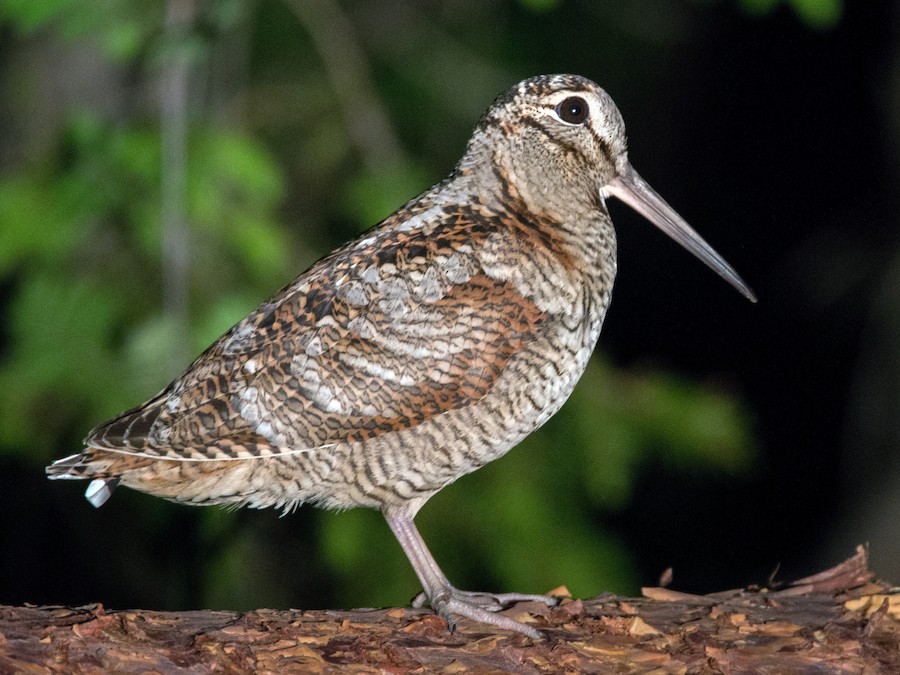
Dove vive Eurasian Woodcock?
Scolopax rusticola
Visto un uccello? Identificalo all'istante con l'app Birdby
Apri l'appEurasian Woodcock vive in habitat e regioni specifiche. Sapere dove e quando guardare migliora le possibilità di un avvistamento riuscito.
Biomi
Temperate and boreal forests, mixed woodlands, dense scrub, and thickets.
Areale geografico
Widespread across the Palearctic. Breeding range extends from Western Europe (including the UK and Ireland) across Scandinavia, Russia, and into East Asia (Japan, China). Winters in Western and Southern Europe, North Africa, and South Asia.
Ambienti preferiti
Prefers damp, deciduous or mixed woodlands with dense undergrowth, soft soil for probing, and scattered clearings. Often found near water sources or boggy areas.
Fascia altitudinale
Typically found from sea level up to 2,000 meters (6,500 ft), occasionally higher in some mountainous regions during migration.
Dove guardare
Damp Deciduous or Mixed Woodlands
Focus on areas with dense undergrowth, leaf litter, and soft, moist soil, especially near streams or boggy patches. Look for areas with mature trees providing good cover.
Forest Edges and Clearings
While they prefer dense cover, they may forage at the edges of woodlands or in small clearings, particularly at dusk or dawn.
Wintering Grounds
In winter, they can be found in similar habitats in milder climates, often in coastal woodlands or sheltered valleys.
Consigli sul campo
- Timing is Key. The best time to observe Eurasian Woodcocks is at dusk or dawn, especially during the breeding season (March-July) when males perform their 'roding' display. Outside of this, they are largely nocturnal and very secretive.
- Listen for Roding. Learn the distinctive 'orrrt-orrrt-orrrt psissp' call of the roding male. This is often the first indication of their presence.
- Walk Quietly. Move slowly and quietly through suitable woodland habitat. You are more likely to flush one by surprise than to spot one sitting still due to their camouflage.
- Look for Droppings. Look for their distinctive droppings, which are often white and splashy, sometimes with a dark center, found on paths or open ground in their habitat.
- Use Binoculars. Even if you flush one, it will likely be a brief view. Binoculars will help confirm identification quickly.
Migrazione
Partially migratory. Northern and eastern populations are fully migratory, moving to warmer wintering grounds in Western and Southern Europe, North Africa, and South Asia. Western and southern European populations may be resident or undertake shorter, altitudinal migrations. Migration occurs mainly at night.
Esplora Eurasian Woodcock
Identifica uccelli ovunque
Gratis su iOS, Android e Web. Identificazione per foto e suono, database completo e la tua lista personale.