
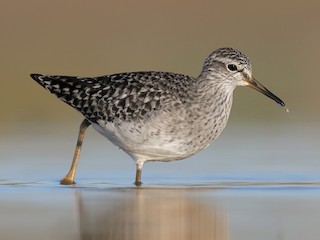
Dove vive Wood Sandpiper?
Tringa glareola
Visto un uccello? Identificalo all'istante con l'app Birdby
Apri l'appWood Sandpiper vive in habitat e regioni specifiche. Sapere dove e quando guardare migliora le possibilità di un avvistamento riuscito.
Biomi
Boreal forests, taiga, tundra, wetlands, marshes, bogs, wet meadows, shallow freshwater pools, rice paddies, sewage farms.
Areale geografico
Breeds across northern Eurasia from Scandinavia east to Siberia and Kamchatka. Winters in Africa (south of the Sahara), South Asia (India, Southeast Asia), and Australasia (Australia, New Zealand). Migrates through much of Europe, the Middle East, and Central Asia.
Ambienti preferiti
Shallow freshwater wetlands with emergent vegetation, muddy edges, and open water. During breeding, prefers open taiga bogs and wet clearings. During migration and winter, found in a variety of freshwater habitats, including flooded fields, ponds, and sewage works.
Fascia altitudinale
Primarily lowlands, but can be found at moderate elevations during migration.
Dove guardare
Freshwater Wetlands
Look in shallow freshwater marshes, bogs, wet meadows, and the edges of ponds and lakes, especially those with emergent vegetation.
Flooded Fields and Rice Paddies
During migration and in wintering grounds, they frequently utilize flooded agricultural areas, including rice paddies and sewage farms.
Taiga and Boreal Forests
In breeding areas, seek them in open bogs, wet clearings, and marshy areas within the taiga and boreal forest zones.
Consigli sul campo
- Scan shallow water edges. Wood Sandpipers prefer to forage in very shallow water or on muddy banks. Use binoculars to scan these areas carefully.
- Listen for calls. Their distinctive 'chip-chip-chip' call is often the first indication of their presence, especially when they are flushed.
- Observe flight pattern. If a small wader flies up, look for the white rump and the absence of a wing-bar to help confirm identification.
- Check for head/tail bobbing. While not as pronounced as a Common Sandpiper, they do exhibit a characteristic head and tail bobbing motion when at rest or foraging.
Migrazione
Long-distance migratory. Breeds in the northern Palearctic and winters in the Afrotropics, Indomalaya, and Australasia. Migration occurs in broad fronts, with significant stopovers at suitable wetland habitats. Spring migration is typically from March to May, and autumn migration from July to October.
Esplora Wood Sandpiper
Identifica uccelli ovunque
Gratis su iOS, Android e Web. Identificazione per foto e suono, database completo e la tua lista personale.