
Visto un uccello? Identificalo all'istante con l'app Birdby
Apri l'appInformazioni
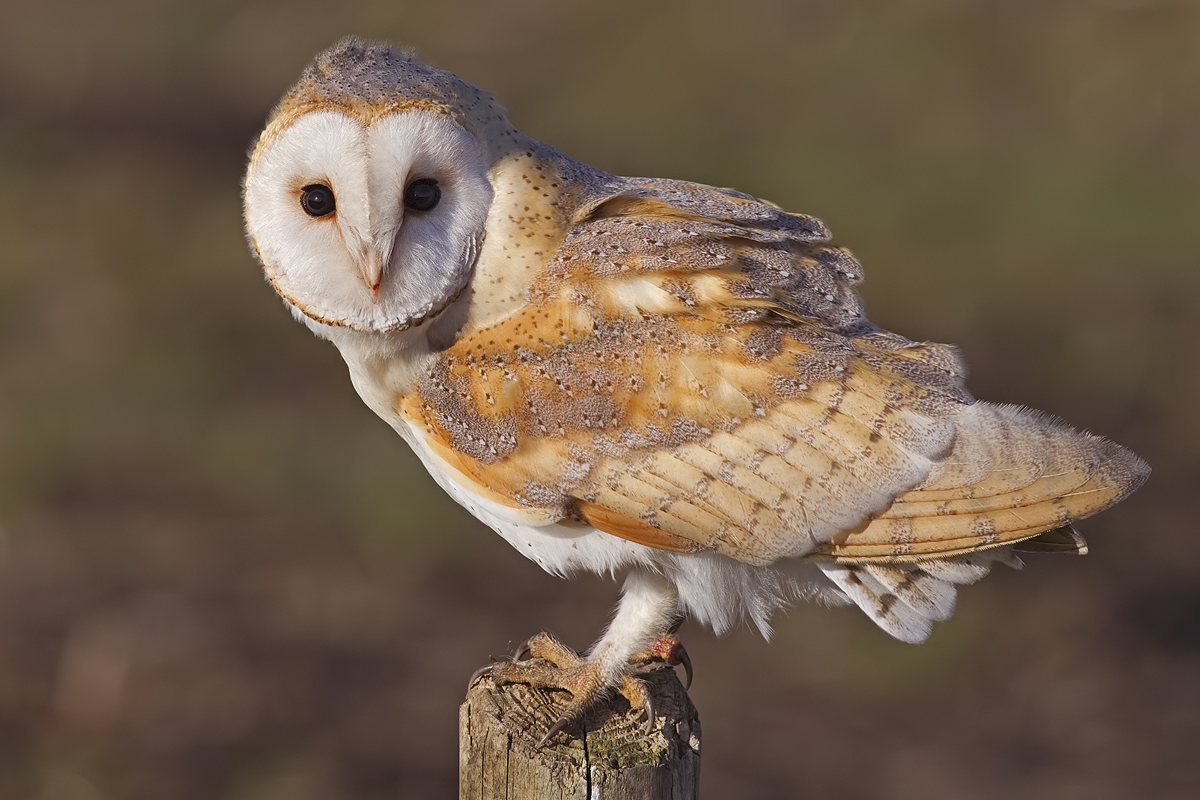
The Barn Owl, known as Barbagianni in Italian, is a medium-sized, pale owl with long wings and legs. It is one of the most widespread bird species, found on every continent except Antarctica. Renowned for its distinctive heart-shaped facial disc and silent flight, it is a highly efficient nocturnal predator, primarily feeding on small mammals. Its haunting calls and preference for human-modified landscapes, such as barns and old buildings, have led to various cultural associations.
Dimensioni e longevità
- Lunghezza
- 32-40 cm (13-16 in)
- Apertura alare
- 100-125 cm (39-49 in)
- Peso
- 250-550 g (8.8-19.4 oz)
- Longevità
- 1-2 years in the wild (up to 15-20 years in captivity)
- Dieta
- Carnivore (primarily small mammals, especially voles and shrews; occasionally small birds, insects, and amphibians)
Caratteristiche fisiche
- Piumaggio
- Upperparts are typically a mix of buff and orange-brown, finely speckled with grey and black. Underparts are pure white to buff, often with small dark spots, varying geographically. The most striking feature is the pure white, heart-shaped facial disc, bordered by a rufous-brown rim. Flight feathers are barred.
- Forma del becco
- Small, sharply hooked, pale yellowish-horn colored.
- Colore degli occhi
- Small, dark, beady eyes, set within the facial disc.
- Colore delle zampe
- Long, feathered legs with dark grey to black talons.
- Caratteristiche distintive
- Heart-shaped white facial disc, dark eyes, pale plumage, silent flight, and long legs. Its overall pale appearance, especially the white underparts, is a key identifier.
- Aspetto giovanile
- Juveniles resemble adults but may have softer, fluffier plumage and less defined facial disc markings. They attain adult plumage after their first molt.
- Cambiamenti stagionali
- No significant seasonal plumage changes. Plumage remains consistent year-round, though wear and tear can make it appear duller before molting.
- Dimorfismo sessuale
- Females are typically slightly larger and heavier than males, and often have more extensive and darker spotting on their underparts and a richer rufous wash on the chest. Males tend to be whiter underneath with fewer spots.
Come identificare
- 1
Facial Disc
Look for the distinctive pure white, heart-shaped facial disc. This is the most reliable field mark, even in low light.
- 2
Plumage Coloration
Observe the overall pale appearance, especially the white underparts (which may have fine spots). The back is buffy-orange with grey mottling.
- 3
Flight Style
Note its silent, buoyant, and wavering flight, often low over fields. It appears to float rather than flap vigorously.
- 4
Eyes
Its small, dark, beady eyes are set within the white facial disc, contrasting with the yellow eyes of many other owl species.
- 5
Calls
Listen for its characteristic long, eerie, hissing screech ('shreeee'). This is often heard at night and is quite distinct from the hooting of other owls.
- 6
Habitat
Consider the habitat: open country, farmland, and areas with old buildings or barns are prime locations for Barn Owls.
Habitat e areale
- Biomi
- Grasslands, agricultural fields, open woodlands, marshes, deserts, and suburban areas.
- Areale geografico
- Nearly cosmopolitan, found across Europe, Africa, Asia, Australasia, and the Americas. Absent from polar and desert regions, and some oceanic islands.
- Fascia altitudinale
- Sea level up to 4,000 meters (13,000 feet), though typically found at lower elevations.
- Ambienti preferiti
- Open country with scattered trees, hedgerows, and access to human structures for nesting and roosting (e.g., barns, old buildings, church towers, ruins). Requires good hunting grounds with abundant small mammal populations.
Comportamento
- Periodo di attività
- Nocturnal, becoming active at dusk and hunting throughout the night. Occasionally seen hunting at dawn or even during the day, especially when feeding young or during periods of food scarcity.
- Abitudini alimentari
- Primarily a nocturnal hunter, using its exceptional hearing and silent flight to locate prey in complete darkness. It typically hunts by flying low over open ground, hovering, or perching and dropping onto unsuspecting prey. Prey is swallowed whole, and indigestible parts are regurgitated as pellets.
- Comportamento sociale
- Generally solitary or found in pairs during the breeding season. They are monogamous, often pairing for life. Outside the breeding season, individuals may roost communally in suitable locations.
- Tipo di volo
- Characterized by silent, buoyant, and wavering flight, often described as moth-like. It flies with slow, deep wing beats, often gliding for extended periods.
- Migrazione
- Mostly resident throughout its range, but northern populations may undertake short-distance dispersal or irruptive movements in response to prey availability or harsh weather. Young birds disperse from their natal territories.
- Territorialità
- Pairs defend a breeding territory, which can vary in size depending on prey availability. Roosting sites may also be defended.
Canto e richiami
- Canto
- The Barn Owl does not have a true song. Its primary vocalization is a long, drawn-out, eerie, hissing screech, often described as a 'shreeee' or 'kreeee' call, which can last for up to 2 seconds. This call is typically given during flight or from a perch.
- Richiamo
- In addition to the screech, Barn Owls produce a variety of other sounds including hisses, snores, clicks, and gurgles, especially around the nest. Young owls make a persistent, raspy 'chittering' or 'snoring' sound when begging for food.
- Quando vocalizza
- Most vocalizations occur at night, particularly during the breeding season when advertising territory, attracting mates, or communicating with young. Begging calls from owlets are continuous throughout the night.
Riproduzione
- Stagione riproduttiva
- Highly variable depending on geographic location and food availability. Can breed year-round in tropical regions, but typically March-August in temperate zones. May have multiple clutches in a good prey year.
- Abitudini di nidificazione
- Does not build a nest. Lays eggs directly on a substrate in a sheltered cavity. Preferred sites include tree hollows, cliff ledges, caves, and especially human structures like barns, church steeples, abandoned buildings, and nest boxes.
- Dimensione della covata
- Typically 4-7 eggs, but can range from 2 to 12 depending on food availability.
- Descrizione dell'uovo
- Eggs are dull white, oval-shaped, and smooth. They are laid asynchronously, meaning incubation begins with the first egg, resulting in a size difference among chicks.
- Periodo di incubazione
- 29-34 days, primarily by the female.
- Periodo di involo
- 50-60 days. Young owls remain dependent on parents for several weeks after fledging.
- Cure parentali
- Female incubates and broods the young, while the male provides food for both the female and the owlets. Both parents participate in feeding the older young.
Dove trovarlo
Farmland and Agricultural Areas
Barn Owls frequently hunt over open fields, meadows, and pastures where small mammal prey is abundant. Look for them flying low over these areas at dusk or dawn.
Old Barns and Outbuildings
These structures provide ideal roosting and nesting sites. Check for openings where owls might enter, and look for whitewash (droppings) or pellets below potential roosts.
Church Steeples and Ruins
Historic buildings with accessible cavities are favored by Barn Owls for nesting and roosting, particularly in Europe.
Nest Boxes
In areas with active conservation efforts, purpose-built Barn Owl nest boxes are often installed in suitable habitats. These can be excellent places to observe them.
Roadsides
Barn Owls are sometimes seen hunting along roadsides at night, attracted by prey in the verges. Drive slowly and carefully, scanning the edges of fields.
Consigli sul campo
- Go at Dusk or Dawn. Barn Owls are primarily nocturnal, so the best times to spot them are during the crepuscular hours when they begin or end their hunting activities.
- Listen for Calls. Their distinctive screech is often heard before they are seen. Familiarize yourself with their vocalizations.
- Look for Pellets. Barn Owls regurgitate pellets containing indigestible prey remains. Finding these under potential roosts (e.g., barn rafters, tree cavities) indicates their presence.
- Scan Open Fields. Watch for their characteristic low, buoyant flight over open grasslands and agricultural fields.
- Use Binoculars. Even in low light, binoculars can help confirm identification by revealing the facial disc and plumage details.
- Be Patient and Quiet. Barn Owls are shy. Approach potential sites quietly and avoid sudden movements or loud noises.
Specie simili
Short-eared Owl
Asio flammeus
The Short-eared Owl is more buffy-brown overall, has yellow eyes, and small 'ear tufts' (though often not visible). It hunts more frequently during the day and has a more direct, flapping flight. Its facial disc is rounder and less distinctly heart-shaped than the Barn Owl's.
Long-eared Owl
Asio otus
The Long-eared Owl is darker, more mottled brown, with prominent long ear tufts (when raised) and orange eyes. It has a more upright posture and typically hunts in denser woodland edges, whereas the Barn Owl prefers open country.
Snowy Owl
Bubo scandiacus
The Snowy Owl is much larger, almost entirely white (especially males), with yellow eyes. It is an Arctic species and is unmistakable due to its size and coloration. It hunts during the day.
Fatti rapidi
- Hunting Strategy:
- Relies heavily on exceptional hearing to locate prey in darkness.
- Silent Flight:
- Specialized feather structure allows for virtually silent flight, aiding in surprise attacks.
- Facial Disc Function:
- The heart-shaped facial disc acts as a parabolic reflector, channeling sound to its ears.
- Ecological Role:
- Important natural pest control, consuming large numbers of rodents.
- Global Distribution:
- One of the most widespread land birds in the world.
- Cultural Significance:
- Often associated with mystery, wisdom, and sometimes ill omens in folklore.
Curiosità
- A single Barn Owl family can consume up to 3,000 rodents in a year, making them incredibly valuable for pest control in agricultural areas.
- Barn Owls have asymmetrical ear openings, with one ear higher than the other. This asymmetry helps them pinpoint the exact location of sounds in three dimensions, even in total darkness.
- Unlike many owls that hoot, the Barn Owl's primary call is a chilling, drawn-out screech, which has contributed to its 'ghost owl' reputation.
- Their long legs and specialized talons are adapted for catching small mammals in tall grass.
- The 'alba' in its scientific name, Tyto alba, means 'white' in Latin, referring to its pale underparts.
Classificazione scientifica
- Regno
- Animalia
- Phylum
- Chordata
- Classe
- Aves
- Ordine
- Strigiformes
- Famiglia
- Tytonidae
- Genere
- Tyto
- Specie
- Tyto alba
Esplora Barn Owl
Identifica uccelli ovunque
Gratis su iOS, Android e Web. Identificazione per foto e suono, database completo e la tua lista personale.