
Come identificare Barn Owl
Tyto alba
Visto un uccello? Identificalo all'istante con l'app Birdby
Apri l'appPer identificare correttamente Barn Owl (Tyto alba), controlla ciascuna di queste caratteristiche. Gli uccelli possono essere complicati da riconoscere, perché comportamento, habitat e canto spesso confermano ciò che una sola foto non può.
Dimensioni a colpo d'occhio
- Lunghezza
- 32-40 cm (13-16 in)
- Apertura alare
- 100-125 cm (39-49 in)
- Peso
- 250-550 g (8.8-19.4 oz)
Caratteristiche fisiche da controllare
- 1
Piumaggio
Colorazione e disegno generale del piumaggio.
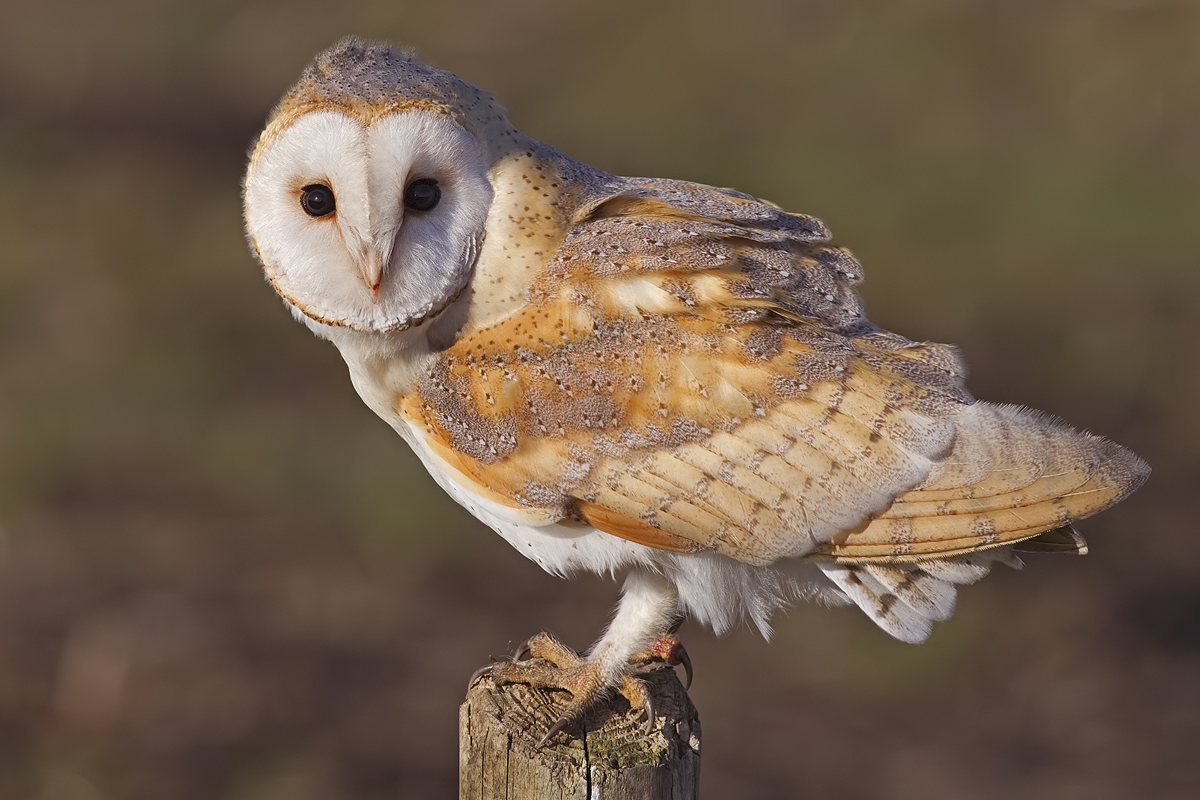
Upperparts are typically a mix of buff and orange-brown, finely speckled with grey and black. Underparts are pure white to buff, often with small dark spots, varying geographically. The most striking feature is the pure white, heart-shaped facial disc, bordered by a rufous-brown rim. Flight feathers are barred.
- 2
Forma del becco
Forma e colore del becco, un segno di campo chiave.
Small, sharply hooked, pale yellowish-horn colored.
- 3
Colore degli occhi
Colore dell'iride e segni distintivi sugli occhi.
Small, dark, beady eyes, set within the facial disc.
- 4
Colore delle zampe
Colore di zampe e piedi.
Long, feathered legs with dark grey to black talons.
- 5
Caratteristiche distintive
Tratti distintivi che separano questa specie.
Heart-shaped white facial disc, dark eyes, pale plumage, silent flight, and long legs. Its overall pale appearance, especially the white underparts, is a key identifier.
- 6
Aspetto giovanile
Come i giovani si differenziano dagli adulti.
Juveniles resemble adults but may have softer, fluffier plumage and less defined facial disc markings. They attain adult plumage after their first molt.
- 7
Cambiamenti stagionali
Variazione del piumaggio tra stagione riproduttiva e non.
No significant seasonal plumage changes. Plumage remains consistent year-round, though wear and tear can make it appear duller before molting.
- 8
Dimorfismo sessuale
Differenze tra maschi e femmine.
Females are typically slightly larger and heavier than males, and often have more extensive and darker spotting on their underparts and a richer rufous wash on the chest. Males tend to be whiter underneath with fewer spots.
Segni di campo chiave
- Facial Disc. Look for the distinctive pure white, heart-shaped facial disc. This is the most reliable field mark, even in low light.
- Plumage Coloration. Observe the overall pale appearance, especially the white underparts (which may have fine spots). The back is buffy-orange with grey mottling.
- Flight Style. Note its silent, buoyant, and wavering flight, often low over fields. It appears to float rather than flap vigorously.
- Eyes. Its small, dark, beady eyes are set within the white facial disc, contrasting with the yellow eyes of many other owl species.
- Calls. Listen for its characteristic long, eerie, hissing screech ('shreeee'). This is often heard at night and is quite distinct from the hooting of other owls.
- Habitat. Consider the habitat: open country, farmland, and areas with old buildings or barns are prime locations for Barn Owls.
Esplora Barn Owl
Identifica uccelli ovunque
Gratis su iOS, Android e Web. Identificazione per foto e suono, database completo e la tua lista personale.