
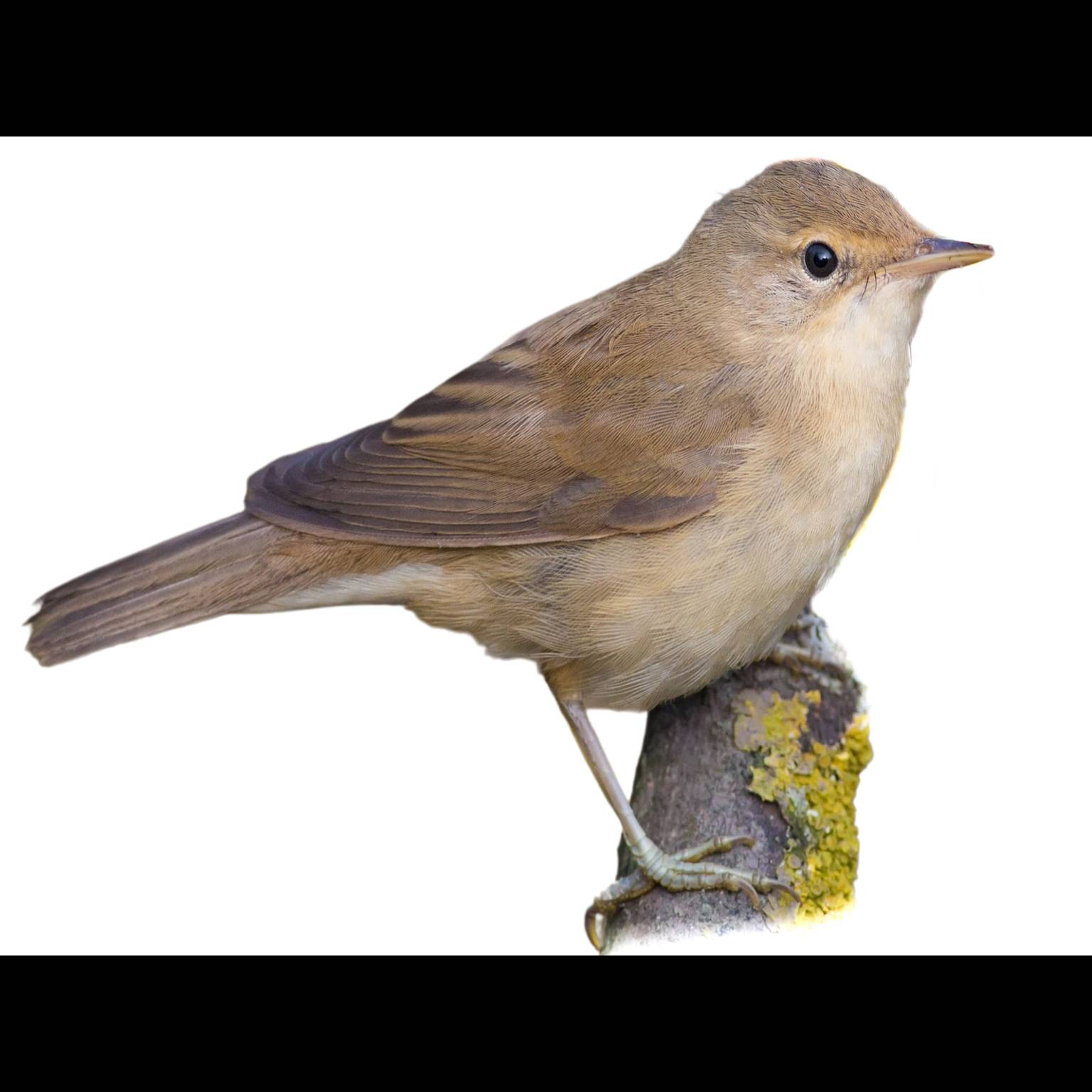
How to identify the Eurasian Reed Warbler
Acrocephalus scirpaceus
Spotted a bird? Identify it instantly with the Birdby app
Open the appTo correctly identify the Eurasian Reed Warbler (Acrocephalus scirpaceus), check each of these features. Birds can be tricky: habit, habitat, and call often confirm a sighting that a single photo cannot.
Size at a glance
- Length
- 12.5-14 cm
- Wingspan
- 17-21 cm
- Weight
- 10-15 g
Physical features to check
- 1
Plumage
Overall feather coloration and pattern.
Upperparts are uniformly plain, warm brown, lacking streaks or prominent markings. Underparts are buffish-white, becoming slightly darker buff on the flanks and undertail coverts. The throat is whitish. It has a faint, pale supercilium (eyebrow stripe) that is often indistinct, and a dark eye-stripe. The primary projection is relatively short.
- 2
Beak shape
Shape and color of the bill: a key field mark.
Slender, pointed, and dark horn-colored, with a paler base to the lower mandible.
- 3
Eye color
Iris color and any distinctive eye markings.
Dark brown.
- 4
Leg color
Leg and foot color.
Dark grey to brownish-grey.
- 5
Distinguishing features
Standout features that separate this species.
Overall plain, unstreaked brown plumage, short primary projection, and a relatively flat head profile. The faint supercilium and lack of strong facial markings are key. Often seen clambering acrobatically through reeds.
- 6
Juvenile appearance
How young birds differ from adults.
Juveniles resemble adults but often have a slightly richer, more rufous-brown tone to their upperparts and a more yellowish wash to their underparts, especially on the flanks.
- 7
Seasonal changes
Plumage variation between breeding and non-breeding seasons.
No significant seasonal plumage changes. Plumage may appear slightly fresher and darker after the post-breeding molt.
- 8
Sexual dimorphism
How males and females differ.
None; males and females are identical in plumage.
Key field marks
- Plumage. Look for plain, unstreaked warm brown upperparts and buffish-white underparts. Absence of strong markings is key.
- Supercilium. Note the faint or indistinct pale supercilium. It is not prominent like in a Sedge Warbler.
- Primary Projection. Observe the length of the primary feathers beyond the tertials. In Eurasian Reed Warbler, it is relatively short, appearing less than half the length of the tertials. This helps distinguish it from Marsh Warbler.
- Habitat. Always check the habitat. If it's in a dense reedbed, it's a strong indicator. While other warblers use reeds, this species is a specialist.
- Song. Listen for the characteristic fast, repetitive, chattering, and somewhat monotonous song. This is often the most reliable way to identify it, especially from the Marsh Warbler.
- Behavior. Watch its movements. It often clambers acrobatically up and down reed stems, often staying hidden within the vegetation.
Explore the Eurasian Reed Warbler
Identify birds anywhere
Free on iOS, Android, and Web. Photo & sound identification, full species database, and your personal life list.