
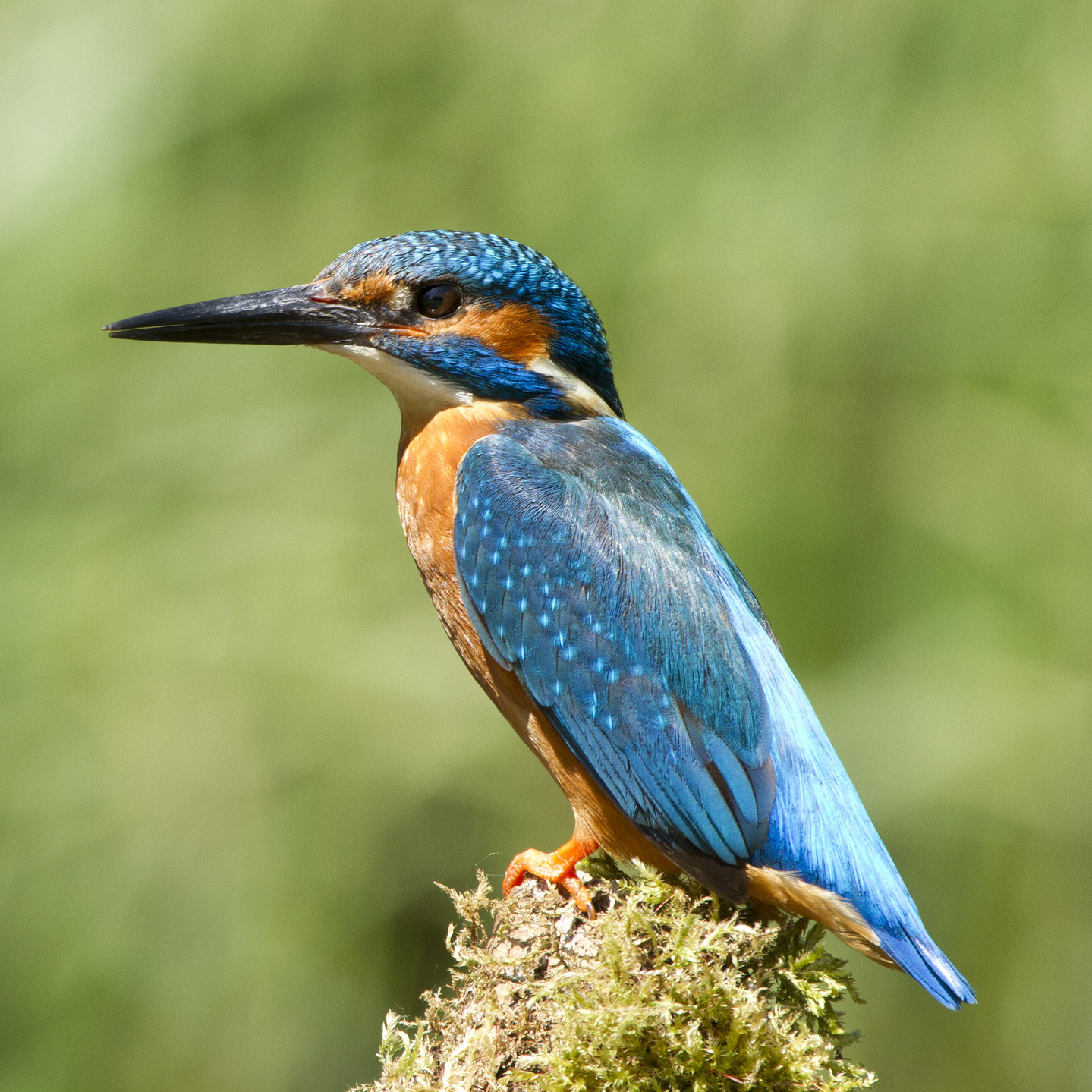
Where does the Common Kingfisher live?
Alcedo atthis
Spotted a bird? Identify it instantly with the Birdby app
Open the appThe Common Kingfisher lives in specific habitats and regions. Knowing where, and when, to look improves your chances of a successful sighting.
Biomes
Temperate forests, wetlands, riparian zones, agricultural landscapes, urban parks.
Geographic range
Widespread across Eurasia and North Africa. Its range extends from Ireland and Spain in the west, across Europe, Asia, and North Africa, reaching Japan and Southeast Asia in the east. Absent from Iceland, northern Scandinavia, and much of Siberia.
Preferred environments
Clear, slow-moving or still freshwater bodies with abundant small fish, such as rivers, streams, canals, lakes, ponds, and reservoirs. Requires perches (branches, reeds) overlooking the water and suitable vertical earth banks for nesting.
Elevation range
Typically found from sea level up to 1,000 meters, occasionally higher in some parts of its range where suitable water bodies exist.
Where to look
Rivers and Streams
Look along clear, unpolluted rivers and streams with slow-moving sections and overhanging vegetation or exposed perches.
Lakes and Ponds
Check the edges of freshwater lakes, ponds, and reservoirs, especially those with reedy margins or quiet coves.
Canals and Ditches
Canals and larger drainage ditches with clear water and fish populations can also host kingfishers.
Gravel Pits and Quarries
Flooded gravel pits and quarries often provide ideal habitat with clear water and vertical banks for nesting.
Field tips
- Patience is Key. Kingfishers can be elusive. Find a suitable spot near water, remain still and quiet, and wait. They often return to favoured perches.
- Look for Movement. Scan the water's edge and low branches for any sudden movement or a 'blue flash' as it flies past. Their flight is very fast.
- Listen for Calls. Their distinctive 'chee-chee' call is often the first indication of their presence, especially when they are flying.
- Early Morning/Late Afternoon. These are often the best times to spot them as they are actively feeding.
- Binoculars Essential. Due to their small size and often rapid movements, binoculars are crucial for good views and identification.
- Look for Droppings/Pellets. Favoured perches may have white droppings or regurgitated pellets (small, greyish, oval masses of fish bones and scales) beneath them, indicating recent kingfisher activity.
Migration
Mostly resident in temperate and warmer parts of its range. Northern populations are partially migratory, moving south or to coastal areas during harsh winters when freshwater bodies freeze over. Migrations are typically short-distance.
Explore the Common Kingfisher
Identify birds anywhere
Free on iOS, Android, and Web. Photo & sound identification, full species database, and your personal life list.