
How to identify the Common Kingfisher
Alcedo atthis
Spotted a bird? Identify it instantly with the Birdby app
Open the appTo correctly identify the Common Kingfisher (Alcedo atthis), check each of these features. Birds can be tricky: habit, habitat, and call often confirm a sighting that a single photo cannot.
Size at a glance
- Length
- 16-17 cm
- Wingspan
- 24-26 cm
- Weight
- 25-46 g
Physical features to check
- 1
Plumage
Overall feather coloration and pattern.
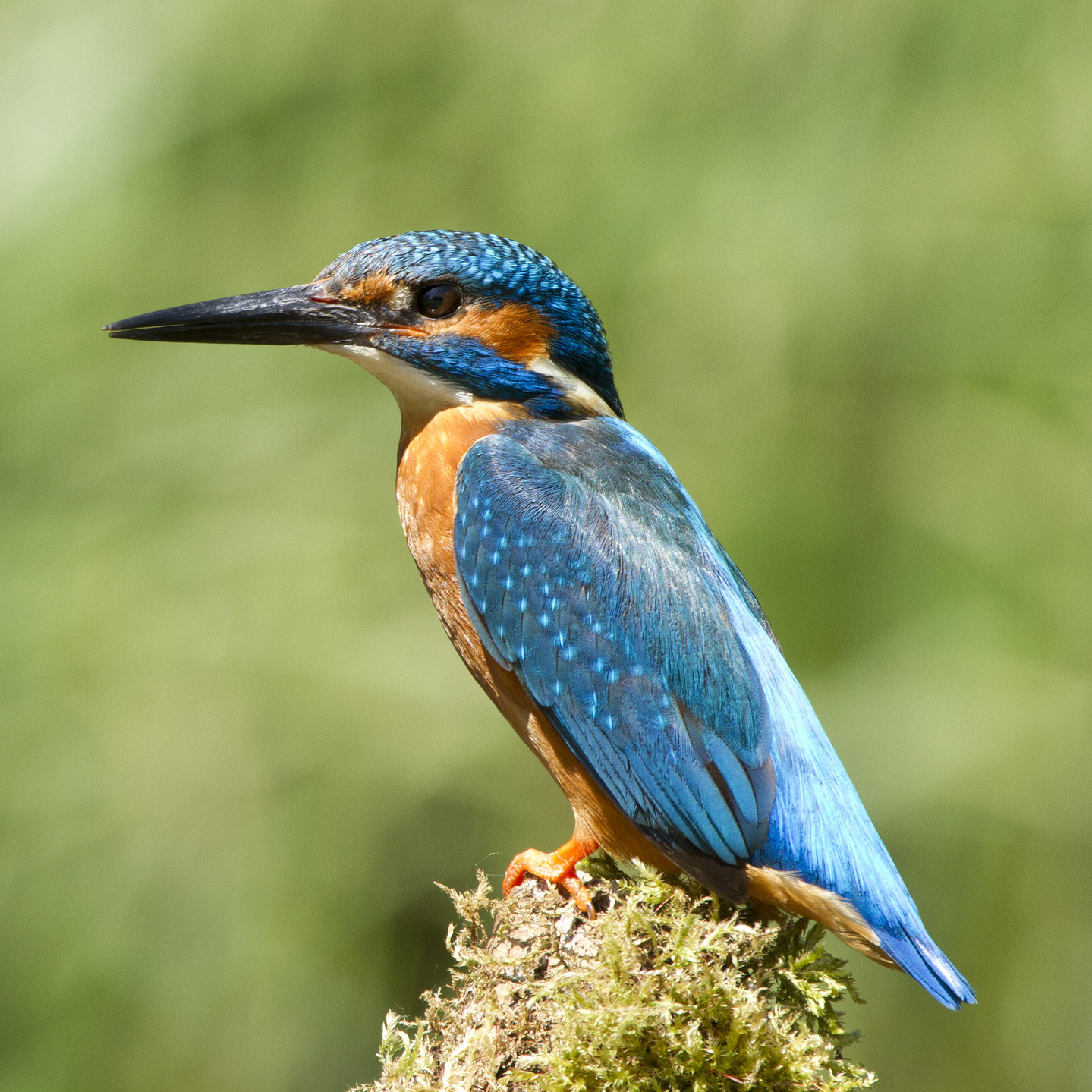
Adults have iridescent metallic blue-green upperparts, a rufous-orange belly, and a white throat patch. A rufous stripe extends from the eye to the nape, bordered by a white patch on the side of the neck. The rump is a striking cobalt blue, particularly noticeable in flight.
- 2
Beak shape
Shape and color of the bill: a key field mark.
Long, straight, dagger-like bill, black in males, with a reddish-orange base to the lower mandible in females.
- 3
Eye color
Iris color and any distinctive eye markings.
Dark brown
- 4
Leg color
Leg and foot color.
Bright red
- 5
Distinguishing features
Standout features that separate this species.
Small size, stocky body, short tail, large head, and long bill. The combination of iridescent blue-green back, cobalt blue rump, and rufous underparts is unmistakable. Its rapid, whirring flight close to the water surface is also characteristic.
- 6
Juvenile appearance
How young birds differ from adults.
Juveniles are duller overall, with less vibrant blue and orange plumage. Their upperparts are often more greenish, and the underparts are paler. The bill is shorter and black, and their legs and feet are duller, often brownish-red. They also have dusky tips to the feathers on the breast, giving a slightly mottled appearance.
- 7
Seasonal changes
Plumage variation between breeding and non-breeding seasons.
No significant seasonal plumage changes. Plumage may appear slightly duller when worn before moulting.
- 8
Sexual dimorphism
How males and females differ.
Subtle. Males have an entirely black bill. Females typically have a reddish-orange base to the lower mandible, which can vary in extent and intensity. Otherwise, plumage is identical.
Key field marks
- Plumage Coloration. Look for the unmistakable combination of iridescent blue-green upperparts, a bright rufous-orange belly, and a white throat. The cobalt blue rump is a key field mark, especially in flight.
- Flight Pattern. Observe its rapid, direct, low-level flight over water. It appears as a 'blue flash' and often follows the curves of the river or stream.
- Bill Shape and Color. Note the long, straight, dagger-like black bill. In females, look for a reddish-orange base to the lower mandible.
- Habitat. Always found near clear, slow-moving freshwater bodies with perches and suitable nesting banks. If you're by such a water source, keep an eye out.
- Vocalization. Listen for its sharp, high-pitched 'chee-chee' or 'chick-chick' call, often given in flight. This call is frequently heard before the bird is seen.
- Perching Behavior. They often perch motionless on low branches, reeds, or rocks overlooking the water, patiently waiting for prey. Look for a small, stocky bird with a disproportionately large head.
Explore the Common Kingfisher
Identify birds anywhere
Free on iOS, Android, and Web. Photo & sound identification, full species database, and your personal life list.