
How to identify the Great Blue Heron
Ardea herodias
Spotted a bird? Identify it instantly with the Birdby app
Open the appTo correctly identify the Great Blue Heron (Ardea herodias), check each of these features. Birds can be tricky: habit, habitat, and call often confirm a sighting that a single photo cannot.
Size at a glance
- Length
- 97-137 cm (38-54 in)
- Wingspan
- 167-201 cm (66-79 in)
- Weight
- 2.1-2.5 kg (4.6-5.5 lbs)
Physical features to check
- 1
Plumage
Overall feather coloration and pattern.
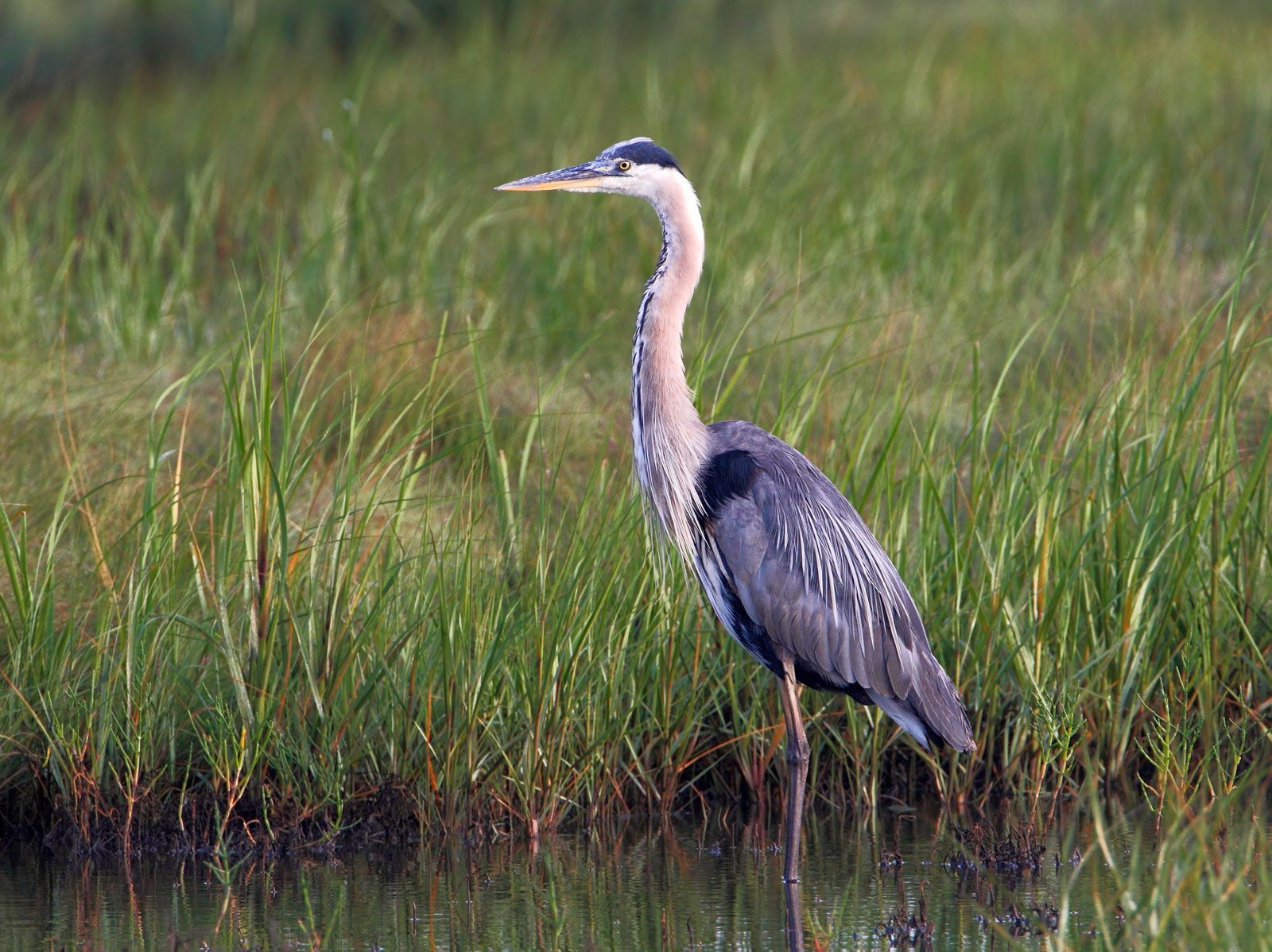
Adults are largely blue-gray with a white face, a black stripe extending from above the eye to the back of the head, and long, black plumes on the head. The neck is rufous-gray with black and white streaking on the front. The underparts are streaked black and white. The flight feathers are darker, often blackish. The 'Great White Heron' (A. h. occidentalis) morph is entirely white.
- 2
Beak shape
Shape and color of the bill: a key field mark.
Long, thick, dagger-like, yellowish-orange, becoming brighter orange during breeding season.
- 3
Eye color
Iris color and any distinctive eye markings.
Yellow
- 4
Leg color
Leg and foot color.
Dull greenish-yellow to dark gray, becoming brighter orange during breeding season.
- 5
Distinguishing features
Standout features that separate this species.
Large size, S-shaped neck in flight and at rest, slow and deliberate movements, long legs, and a prominent black stripe over the eye.
- 6
Juvenile appearance
How young birds differ from adults.
Juveniles are duller overall, with a grayish-brown crown (lacking the distinct black stripe and plumes of adults), a more mottled gray-brown body, and less distinct streaking on the neck and underparts. Their bill is duller, often grayish-yellow.
- 7
Seasonal changes
Plumage variation between breeding and non-breeding seasons.
Plumage does not change significantly seasonally, but bill and leg coloration become brighter (more orange) during the breeding season. Breeding adults develop longer, more prominent plumes on the head and back.
- 8
Sexual dimorphism
How males and females differ.
Males and females are generally similar in plumage and size, though males may be slightly larger and have slightly longer plumes during breeding season.
Key field marks
- Size and Shape. Look for a very large, tall wading bird with long legs, a long S-shaped neck, and a dagger-like bill. In flight, the neck is typically tucked in, and legs trail behind.
- Plumage Color. Observe the overall blue-gray body, white face with a prominent black stripe over the eye, and rufous-gray neck with streaking. The 'Great White Heron' morph is entirely white.
- Behavior. Watch for its characteristic slow, deliberate movements while wading or standing motionless, waiting to strike prey. Its flight is slow and powerful.
- Vocalization. Listen for its harsh, guttural 'fraaaank' call, especially when startled or in flight.
- Habitat. Great Blue Herons are almost always found near water, whether fresh or salt, in a variety of wetland environments.
Explore the Great Blue Heron
Identify birds anywhere
Free on iOS, Android, and Web. Photo & sound identification, full species database, and your personal life list.