
Where does the Muscovy Duck live?
Cairina moschata
Spotted a bird? Identify it instantly with the Birdby app
Open the appThe Muscovy Duck lives in specific habitats and regions. Knowing where, and when, to look improves your chances of a successful sighting.
Biomes
Tropical and subtropical wetlands, forests, swamps, marshes, and agricultural areas.
Geographic range
Native to Mexico, Central America, and South America, ranging from the Rio Grande Valley of Texas south to northern Argentina and Uruguay. Feral populations are established in many parts of the world, including North America (Florida, Texas), Europe, and Australia.
Preferred environments
Prefers wooded swamps, forested rivers, lakes, and ponds, especially those with overhanging trees for perching and nesting. They are often found near human settlements and agricultural lands where food is readily available.
Elevation range
Primarily lowlands, typically below 1,000 meters (3,300 feet), but can be found at higher elevations in some parts of its range.
Where to look
Wooded Wetlands
Look in swamps, forested rivers, and lakes with dense vegetation and overhanging trees in their native range.
Urban/Suburban Ponds
Feral populations are common in parks, golf courses, and residential ponds, especially in Florida and Texas.
Agricultural Areas
They can be found near farms and cultivated fields, particularly those with nearby water sources.
Field tips
- Look Up. Unlike most ducks, Muscovy Ducks frequently perch in trees, so remember to scan tree branches near water bodies.
- Listen Carefully. They are generally quiet, but listening for their soft hisses or trills can help locate them, especially in dense cover.
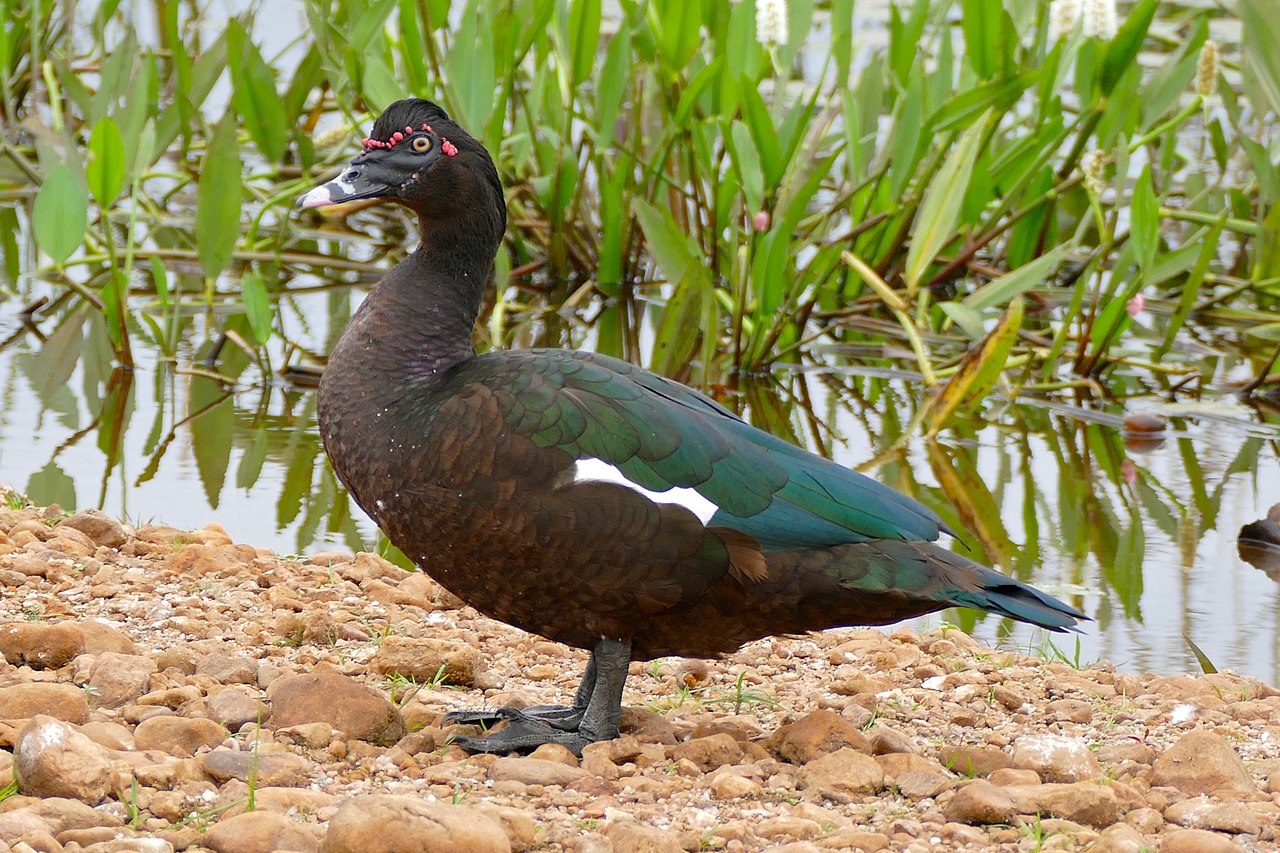
- Observe Facial Features. The caruncles are the most definitive identification feature, so focus on the head and face, particularly in adult birds.
- Check for White Wing Patches. In wild birds, the large white wing patches are a reliable field mark, especially when the bird is in flight or stretching its wings.
Migration
Generally non-migratory (resident) throughout its native range. Some local movements may occur in response to water availability or food resources.
Explore the Muscovy Duck
Identify birds anywhere
Free on iOS, Android, and Web. Photo & sound identification, full species database, and your personal life list.