
How to identify the Muscovy Duck
Cairina moschata
Spotted a bird? Identify it instantly with the Birdby app
Open the appTo correctly identify the Muscovy Duck (Cairina moschata), check each of these features. Birds can be tricky: habit, habitat, and call often confirm a sighting that a single photo cannot.
Size at a glance
- Length
- 66-84 cm (26-33 in)
- Wingspan
- 102-152 cm (40-60 in)
- Weight
- Males: 2.7-6.8 kg (6-15 lbs); Females: 1.4-3.6 kg (3-8 lbs)
Physical features to check
- 1
Plumage
Overall feather coloration and pattern.
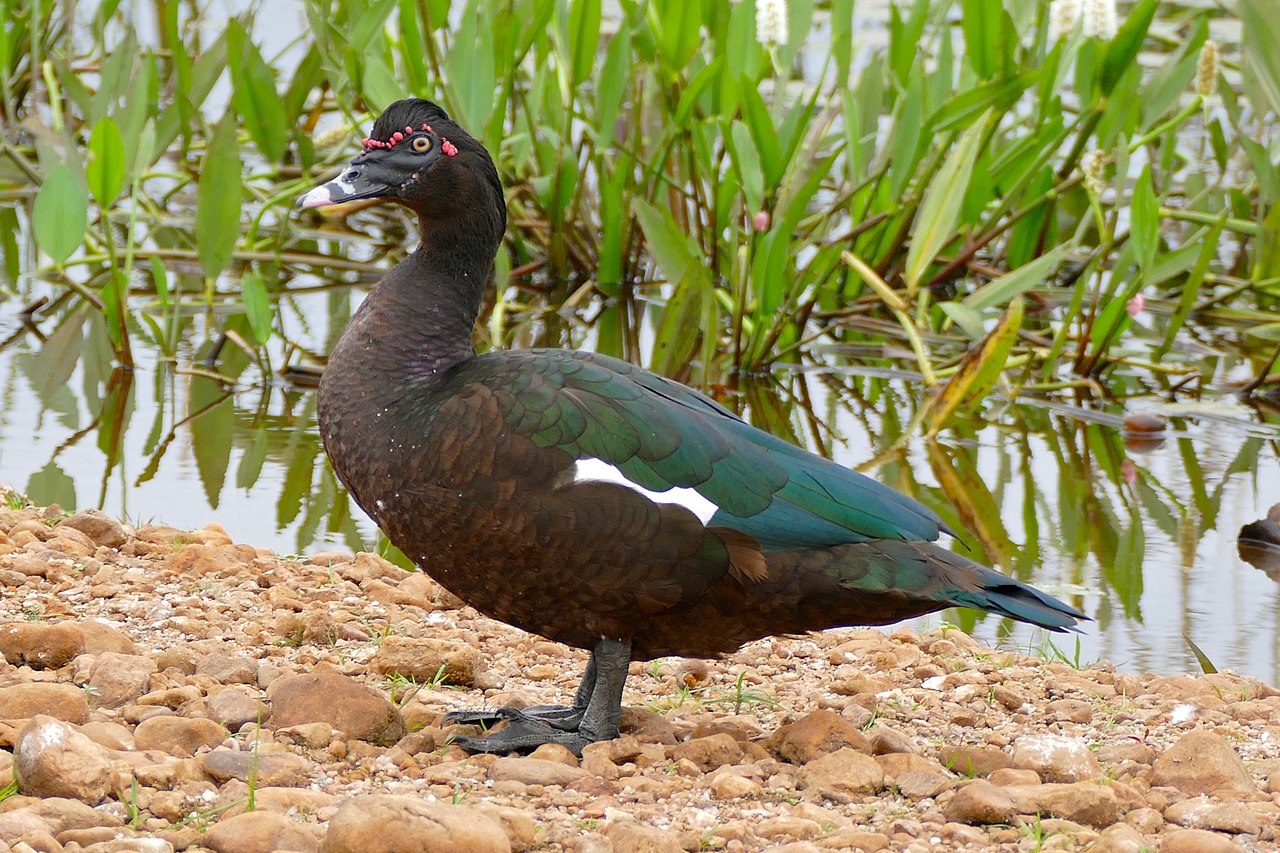
Wild Muscovy Ducks are predominantly glossy black with iridescent green and purple sheens, especially on the back and wings. They have large white patches on the wings, visible in flight and often when at rest. Domesticated varieties show a much wider range of colors including white, black, blue, chocolate, and pied patterns.
- 2
Beak shape
Shape and color of the bill: a key field mark.
Broad, flattened bill, typically dark with pinkish or reddish areas, especially near the base. The bill is often partially obscured by caruncles in males.
- 3
Eye color
Iris color and any distinctive eye markings.
Dark brown, often surrounded by the carunculated facial skin.
- 4
Leg color
Leg and foot color.
Short, stout legs and webbed feet, typically dark gray to black, sometimes with reddish tints.
- 5
Distinguishing features
Standout features that separate this species.
The most distinctive feature is the extensive red or black carunculated (fleshy, warty) skin around the eyes and bill, particularly pronounced in adult males. They also have a crest of feathers on the nape that can be raised. The large white wing patches are a key field mark for wild birds.
- 6
Juvenile appearance
How young birds differ from adults.
Juveniles resemble adult females but are duller in coloration, with less developed caruncles. Their plumage is typically a duller brown-black, and the white wing patches may be less distinct.
- 7
Seasonal changes
Plumage variation between breeding and non-breeding seasons.
No significant seasonal plumage changes. The caruncles may become more vibrant or pronounced during the breeding season, especially in males.
- 8
Sexual dimorphism
How males and females differ.
Males (drakes) are significantly larger than females (hens), often twice the weight. Males have much more extensive and prominent caruncles on their faces, giving them a more 'warty' appearance. Females have smaller, less developed caruncles.
Key field marks
- Facial Caruncles. Look for the distinctive red or black fleshy growths around the eyes and bill. These are much more pronounced in males.
- Size and Shape. Note the large, heavy-bodied duck with a long body and relatively short legs. Males are significantly larger than females.
- Plumage (Wild Birds). Observe the glossy black body with iridescent sheens and the prominent white wing patches, especially visible in flight.
- Behavior. Watch for perching in trees, a characteristic behavior for this species. Also, note their quiet nature compared to other ducks.
- Flight. Identify by their strong, direct flight and the conspicuous white wing patches.
Explore the Muscovy Duck
Identify birds anywhere
Free on iOS, Android, and Web. Photo & sound identification, full species database, and your personal life list.