
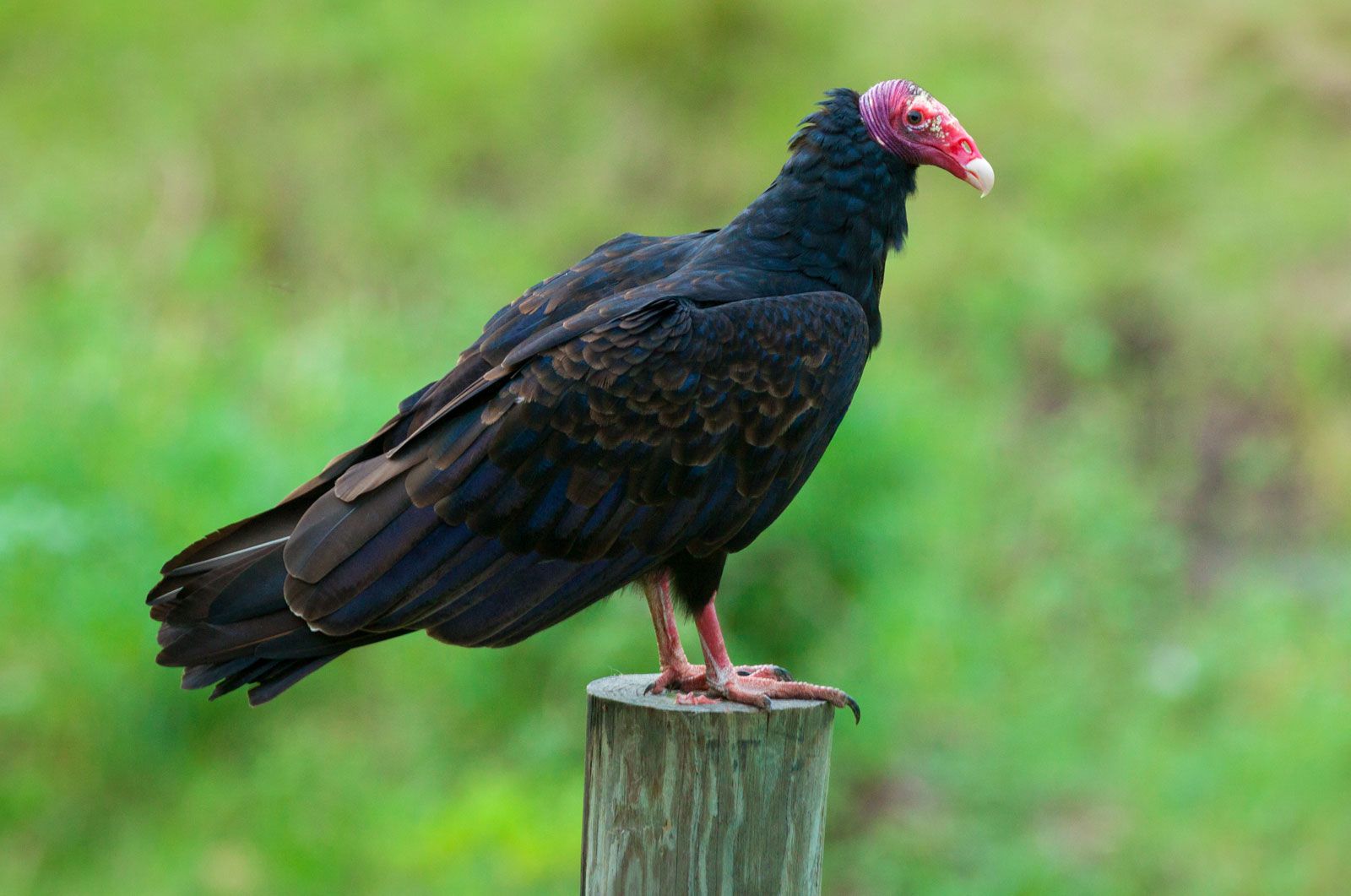
Where does the Turkey Vulture live?
Cathartes aura
Spotted a bird? Identify it instantly with the Birdby app
Open the appThe Turkey Vulture lives in specific habitats and regions. Knowing where, and when, to look improves your chances of a successful sighting.
Biomes
Forests, woodlands, grasslands, deserts, agricultural areas, open country, and suburban environments.
Geographic range
Widespread throughout the Americas, from southern Canada through the United States, Mexico, Central America, and most of South America to Tierra del Fuego.
Preferred environments
Prefers open areas for foraging and soaring, with nearby tall trees, cliffs, or human structures for roosting and nesting. Adaptable to a wide range of environments as long as carrion is available.
Elevation range
Sea level up to 4,300 meters (14,000 feet) in mountainous regions.
Where to look
Open Countryside
Look for them soaring over fields, pastures, and agricultural lands where carrion is likely to be found.
Roadsides
Often seen feeding on roadkill or perched on utility poles and trees near roads.
Thermal Updrafts
Scan the sky on warm, sunny days for soaring birds, especially around midday when thermals are strongest.
Roost Sites
At dawn and dusk, check large, dead trees, communication towers, or cliffs where they often gather in communal roosts.
Field tips
- Look Up. Turkey Vultures spend a significant amount of time soaring high in the sky. Keep an eye on the horizon and overhead, especially on clear, warm days.
- Observe Flight Style. Their characteristic teetering, V-shaped flight is a primary identification cue. If you see a large dark bird wobbling in the air, it's likely a Turkey Vulture.
- Follow Your Nose (Figuratively). While you won't smell carrion from afar, if you notice other scavengers or a strong odor, Turkey Vultures are likely nearby or will be soon.
- Check Roosts. In the early morning or late afternoon, check prominent tall structures or trees for groups of vultures warming themselves or preparing to roost.
Migration
Northern populations are migratory, moving south for the winter. Southern populations are largely resident. Migratory birds travel in large flocks, often numbering in the thousands, utilizing thermals for energy-efficient travel.
Explore the Turkey Vulture
Identify birds anywhere
Free on iOS, Android, and Web. Photo & sound identification, full species database, and your personal life list.