
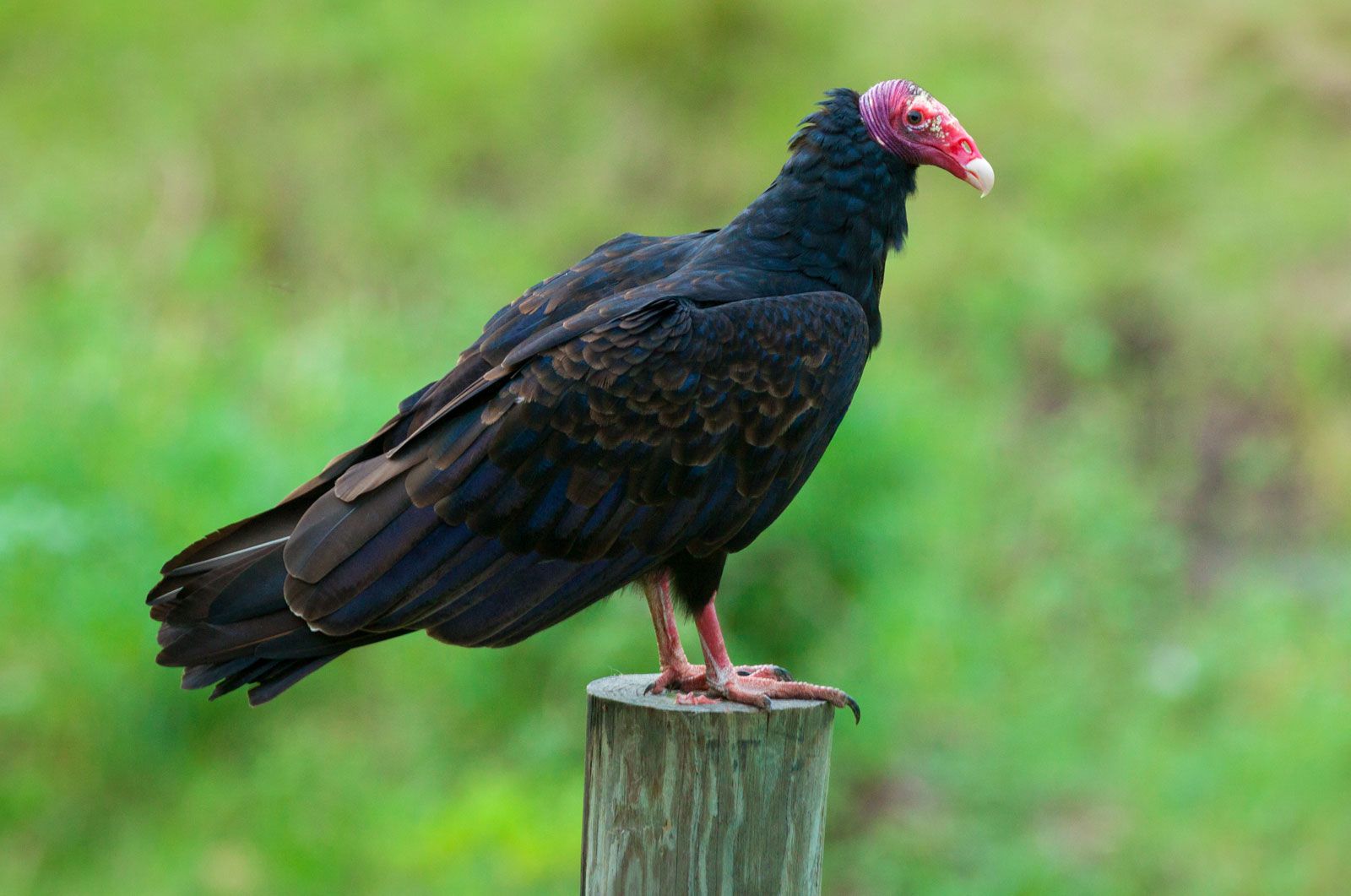
How to identify the Turkey Vulture
Cathartes aura
Spotted a bird? Identify it instantly with the Birdby app
Open the appTo correctly identify the Turkey Vulture (Cathartes aura), check each of these features. Birds can be tricky: habit, habitat, and call often confirm a sighting that a single photo cannot.
Size at a glance
- Length
- 62-81 cm (24-32 in)
- Wingspan
- 160-183 cm (63-72 in)
- Weight
- 0.85-2.4 kg (1.9-5.3 lbs)
Physical features to check
- 1
Plumage
Overall feather coloration and pattern.
Adults have dull blackish-brown body plumage, appearing black from a distance. The undersides of the flight feathers (remiges) are silvery-gray, creating a two-toned effect in flight. The head and neck are featherless and typically bright red in adults, though can appear duller or mottled depending on health and age. Juveniles have a grayish-black head and neck.
- 2
Beak shape
Shape and color of the bill: a key field mark.
Hooked, ivory-colored beak, relatively weak for tearing flesh, adapted for probing.
- 3
Eye color
Iris color and any distinctive eye markings.
Dark brown.
- 4
Leg color
Leg and foot color.
Pale pinkish-white to flesh-colored.
- 5
Distinguishing features
Standout features that separate this species.
Featherless red head (adults), two-toned underwing pattern (silvery flight feathers contrasting with darker wing linings), and a distinctive dihedral (V-shaped) soaring flight.
- 6
Juvenile appearance
How young birds differ from adults.
Juveniles have a grayish-black, downy head and neck, which gradually turns red as they mature, typically by their second year. Their plumage is generally duller than adults.
- 7
Seasonal changes
Plumage variation between breeding and non-breeding seasons.
No significant seasonal plumage changes. The intensity of the red head color can vary with age, health, and excitement.
- 8
Sexual dimorphism
How males and females differ.
Minimal; males and females are similar in plumage and size, though females may be slightly larger on average.
Key field marks
- Flight Profile. Look for the distinctive 'V-shaped' or dihedral wing position while soaring. The bird will often appear to teeter or wobble in the air, unlike the more stable flight of other large raptors.
- Underwing Pattern. Observe the underside of the wings. Turkey Vultures show a clear two-toned pattern: the flight feathers (primaries and secondaries) are silvery-gray, contrasting with the darker blackish wing linings.
- Head Color (Adults). At closer range, note the featherless, bright red head and neck of adult birds. Juveniles will have a grayish-black head.
- Tail Length. Turkey Vultures have a relatively long tail that extends beyond the trailing edge of the wings in flight, giving them a more balanced appearance compared to the shorter-tailed Black Vulture.
- Foraging Behavior. Watch for birds circling low over an area, often indicating they are detecting carrion by smell. They are often among the first scavengers to arrive at a carcass.
Explore the Turkey Vulture
Identify birds anywhere
Free on iOS, Android, and Web. Photo & sound identification, full species database, and your personal life list.