
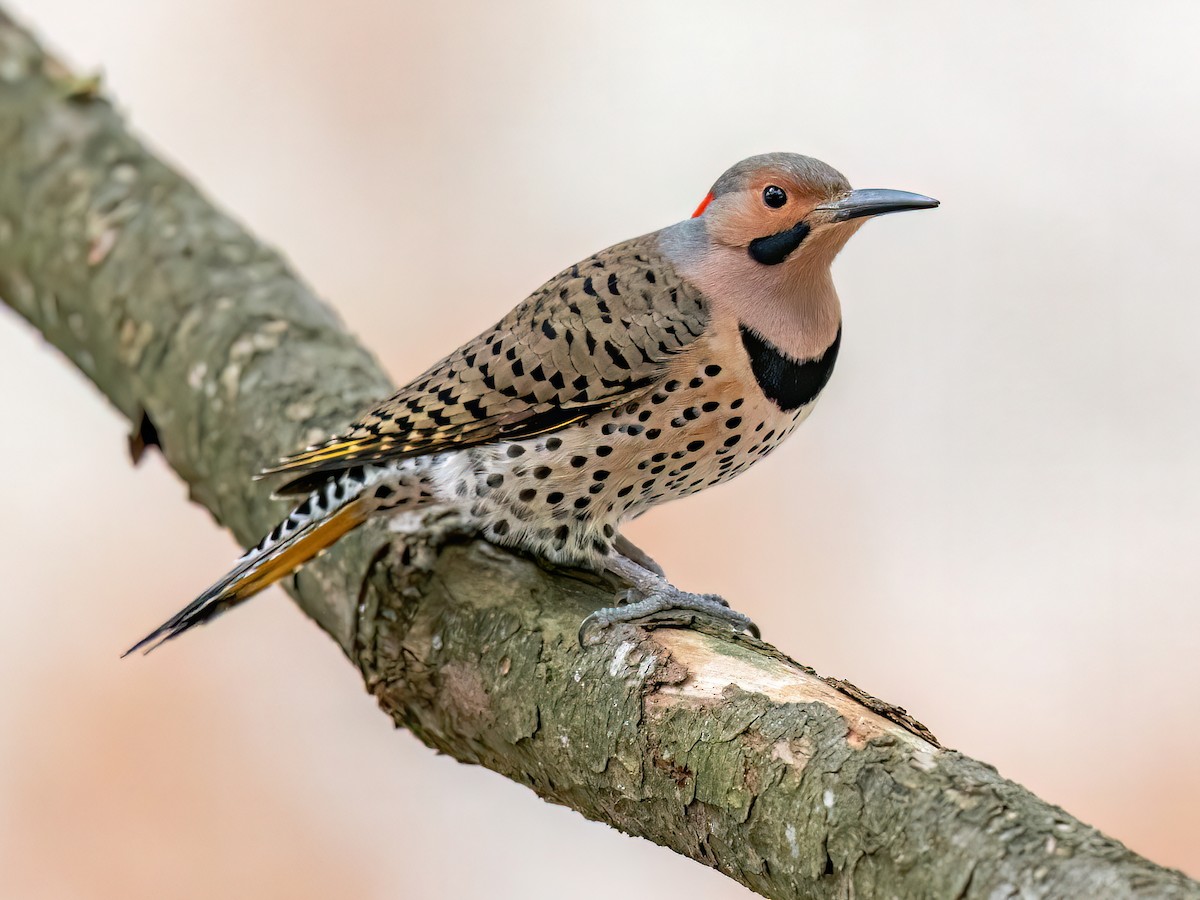
Where does the Northern Flicker live?
Colaptes auratus
Spotted a bird? Identify it instantly with the Birdby app
Open the appThe Northern Flicker lives in specific habitats and regions. Knowing where, and when, to look improves your chances of a successful sighting.
Biomes
Forests, woodlands, open country with scattered trees, suburban areas, parks, and gardens.
Geographic range
Widespread across most of North America, from Alaska and Canada south through the United States and into parts of Mexico and Central America. The Yellow-shafted form occupies the eastern and northern parts of the range, while the Red-shafted form is found in the west.
Preferred environments
Prefers open woodlands, forest edges, savannas, and suburban areas with mature trees and open ground for foraging. They are less common in dense, unbroken forests.
Elevation range
Sea level up to 3,000 meters (10,000 feet) in mountainous regions.
Where to look
Open Woodlands
Look in areas with scattered trees, forest edges, and open canopies where they can forage on the ground.
Suburban Parks and Gardens
Common in urban and suburban environments, especially those with mature trees and lawns, as these provide foraging opportunities for ants.
Savannas and Grasslands with Trees
These habitats offer ideal conditions for ground foraging.
Dead or Decaying Trees
Check for nesting cavities or drumming activity on dead snags or utility poles.
Field tips
- Look on the ground. Unlike most woodpeckers, flickers spend a lot of time foraging on the ground. Scan lawns, open fields, and forest floors.
- Listen for calls and drumming. Their loud calls are distinctive, and their drumming, while less rapid than some woodpeckers, is a good indicator of their presence, especially in spring.
- Watch for undulating flight. Their characteristic bouncy flight pattern with a visible white rump is a strong visual cue, especially when flying between trees.
- Check tree trunks and branches. While they forage on the ground, they still roost and nest in trees, so look for them perched or clinging to vertical surfaces.
Migration
Northern populations are migratory, moving south for the winter. Southern populations are largely resident. Migration occurs during the day, often in loose flocks.
Explore the Northern Flicker
Identify birds anywhere
Free on iOS, Android, and Web. Photo & sound identification, full species database, and your personal life list.