
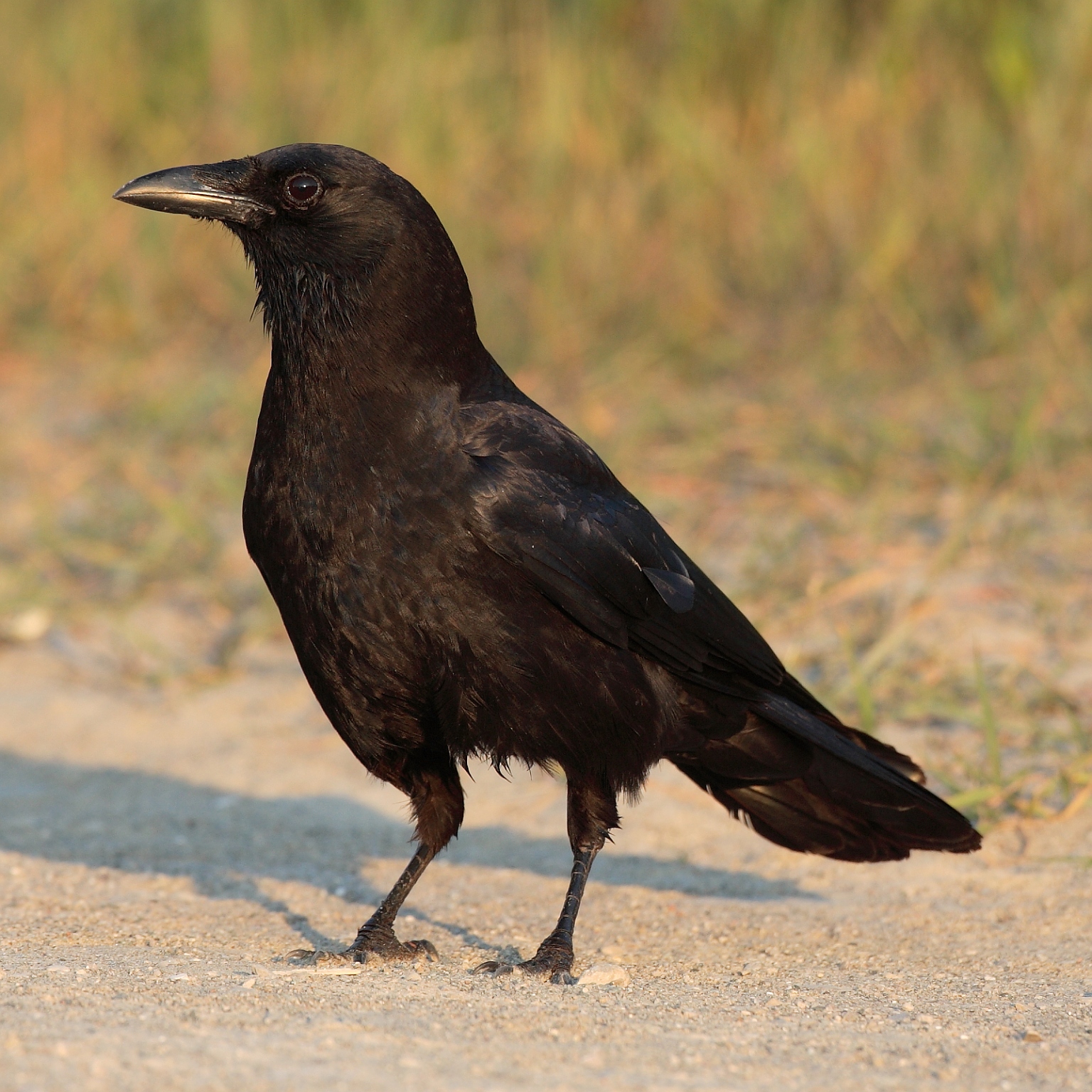
Where does the American Crow live?
Corvus brachyrhynchos
Spotted a bird? Identify it instantly with the Birdby app
Open the appThe American Crow lives in specific habitats and regions. Knowing where, and when, to look improves your chances of a successful sighting.
Biomes
Forests (deciduous, coniferous, mixed), woodlands, open country, agricultural fields, suburban areas, urban parks, coastal areas.
Geographic range
Throughout most of North America, from southern Canada across the United States to northern Mexico. Absent from the extreme northern Arctic and some arid southwestern deserts.
Preferred environments
Highly adaptable, preferring open woodlands, forest edges, and areas with a mix of trees for nesting and roosting, and open ground for foraging. They are particularly common in human-modified landscapes.
Elevation range
Sea level up to approximately 3,000 meters (10,000 feet) in mountainous regions.
Where to look
Urban and Suburban Areas
Parks, residential neighborhoods, city centers, and agricultural fields are prime locations due to abundant food sources and roosting trees.
Open Woodlands and Forest Edges
Areas where forests meet open fields provide both cover for nesting and foraging opportunities.
Agricultural Lands
Fields with crops, especially corn, and areas with livestock often attract crows for foraging.
Communal Roosts
During non-breeding seasons, look for large gatherings of crows (hundreds to thousands) at dusk, flying to established communal roost sites, often in dense stands of trees.
Field tips
- Listen for Calls. Their distinctive 'caw-caw' is often heard before the bird is seen. Learning to differentiate it from Fish Crow and Raven calls is key.
- Observe Social Behavior. Crows are highly social. Look for groups foraging, interacting, or mobbing predators like hawks and owls. This behavior can lead you to them.
- Check Roosts. In fall and winter, locate large communal roosts by observing flight paths of crows heading to a central location around sunset. These can be spectacular to witness.
- Look for Foraging. Crows frequently forage on the ground in open areas. Scan fields, lawns, and roadsides for their black forms.
Migration
Primarily resident throughout much of its range. Northern populations may undertake short-distance, irruptive migrations south during harsh winters, forming large communal roosts of thousands of individuals.
Explore the American Crow
Identify birds anywhere
Free on iOS, Android, and Web. Photo & sound identification, full species database, and your personal life list.