
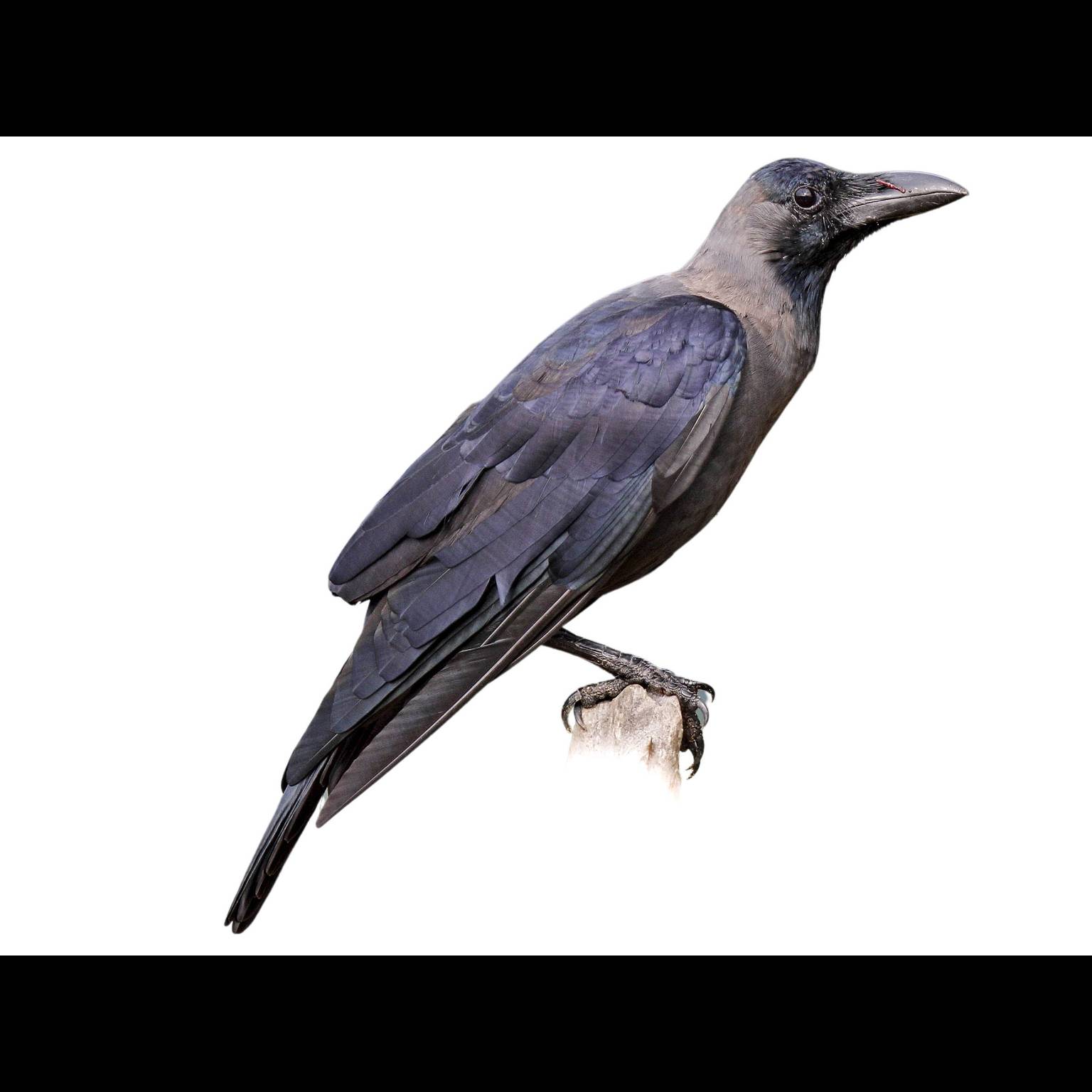
Where does the House Crow live?
Corvus splendens
Spotted a bird? Identify it instantly with the Birdby app
Open the appThe House Crow lives in specific habitats and regions. Knowing where, and when, to look improves your chances of a successful sighting.
Biomes
Urban, suburban, agricultural, coastal areas, open woodlands.
Geographic range
Native to the Indian subcontinent (India, Pakistan, Nepal, Bangladesh, Sri Lanka, Maldives) and parts of Southeast Asia (Myanmar, Thailand, Malaysia, Singapore). Has established invasive populations in numerous other parts of the world, including parts of Africa (East Africa, South Africa), Middle East, Europe (Netherlands), and Australasia.
Preferred environments
Strongly associated with human habitation – towns, cities, villages, ports, and cultivated land. Rarely found in dense forests or remote wilderness.
Elevation range
Primarily lowlands, usually up to 1500 meters (5000 feet) above sea level, but occasionally higher.
Where to look
Urban Areas
Cities, towns, and villages with abundant human activity, food waste, and buildings for nesting and roosting.
Suburban Areas
Residential neighborhoods, parks, and gardens, especially those with mature trees.
Agricultural Landscapes
Areas near farms and cultivated fields, where they can forage for insects, seeds, and scraps.
Ports and Harbors
Coastal and port environments, as they are often transported accidentally by ships, leading to invasive populations.
Waste Disposal Sites
Landfills, refuse dumps, and open markets where food waste is readily available.
Field tips
- Mornings and Evenings. House Crows are particularly active and vocal during dawn and dusk as they move between roosting and foraging areas.
- Listen for Calls. Their distinctive 'kaa-kaa' calls are often the first sign of their presence, especially in noisy urban environments.
- Look Around Human Activity. Focus searches around garbage bins, street food vendors, markets, and any areas where food scraps might be discarded.
- Check Large Trees and Structures. Scan tall trees, utility poles, and buildings for nesting sites or communal roosts, especially outside the breeding season.
- Observe Scavenging Behavior. Watch for birds pecking at the ground, examining refuse, or chasing other smaller birds. Their opportunistic feeding habits are very characteristic.
Migration
Non-migratory. Resident throughout its range, though local movements may occur in response to food availability.
Explore the House Crow
Identify birds anywhere
Free on iOS, Android, and Web. Photo & sound identification, full species database, and your personal life list.