
How to identify the House Crow
Corvus splendens
Spotted a bird? Identify it instantly with the Birdby app
Open the appTo correctly identify the House Crow (Corvus splendens), check each of these features. Birds can be tricky: habit, habitat, and call often confirm a sighting that a single photo cannot.
Size at a glance
- Length
- 40-43 cm (15.5-17 in)
- Wingspan
- 66-79 cm (26-31 in)
- Weight
- 250-350 g (8.8-12.3 oz)
Physical features to check
- 1
Plumage
Overall feather coloration and pattern.
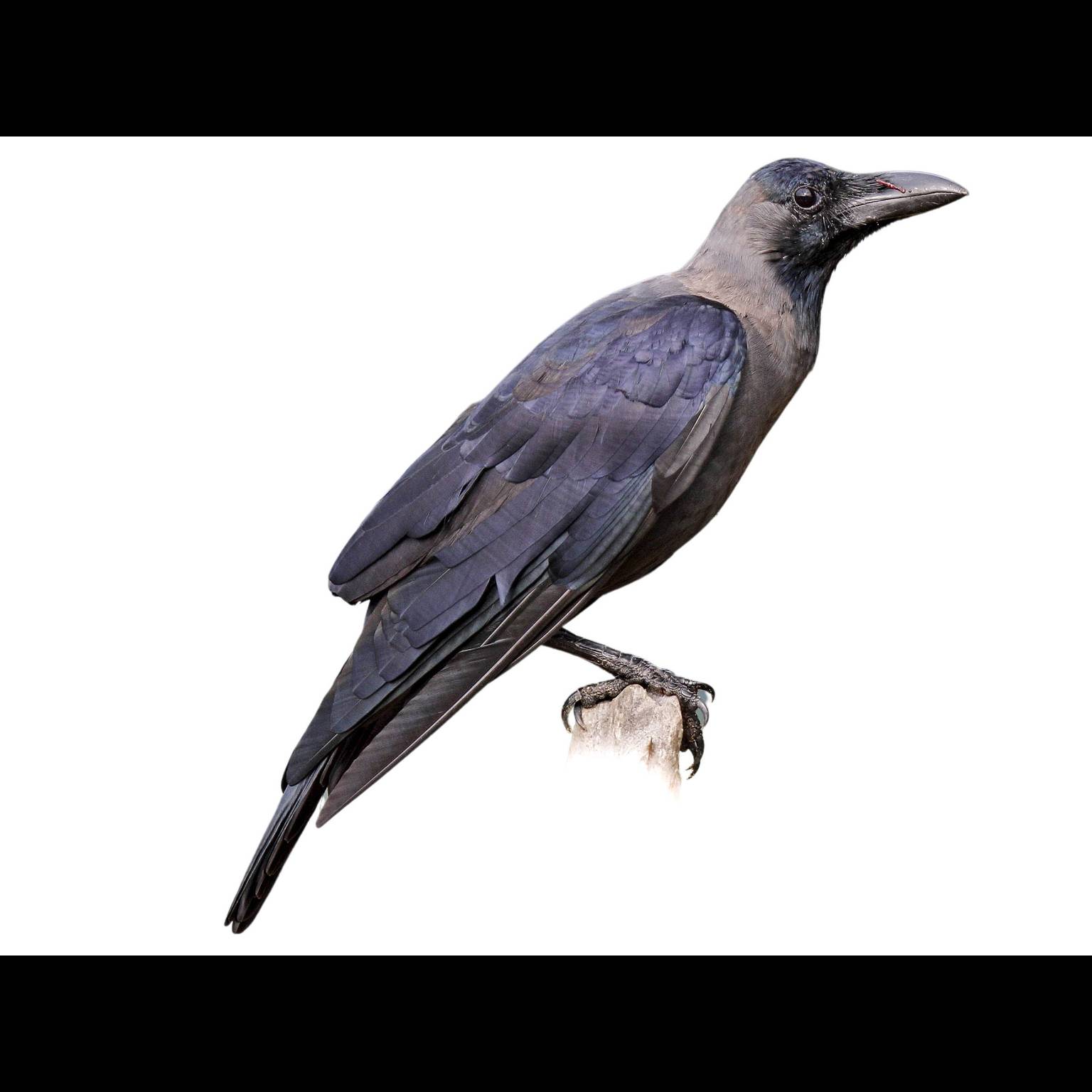
Glossy black head, throat, and upper breast. Nape, back, and underparts are duller greyish-brown, appearing slightly mottled. Wings and tail are dark, often with a purplish-blue sheen in good light.
- 2
Beak shape
Shape and color of the bill: a key field mark.
Stout, slightly curved, and sharply pointed. Black.
- 3
Eye color
Iris color and any distinctive eye markings.
Dark brown.
- 4
Leg color
Leg and foot color.
Black.
- 5
Distinguishing features
Standout features that separate this species.
The most distinctive feature is the bicolored plumage of glossy black head and throat contrasting with greyish-brown nape and body. Its relatively small size compared to other crows is also a key field mark.
- 6
Juvenile appearance
How young birds differ from adults.
Juveniles resemble adults but have duller, less glossy black plumage and a less defined greyish collar. Their eyes can appear lighter brown initially.
- 7
Seasonal changes
Plumage variation between breeding and non-breeding seasons.
No significant seasonal plumage changes.
- 8
Sexual dimorphism
How males and females differ.
Males and females are monomorphic, appearing identical in plumage and size.
Key field marks
- Plumage. Look for the diagnostic bicolor pattern: glossy black head, face, throat, and upper breast contrasting sharply with duller greyish-brown (sometimes appearing grey) on the nape, back, and underparts. Wings and tail are dark black.
- Size. Notice its relatively small size for a crow; it's smaller and more slender than most other common crow species in its native and introduced range.
- Calls. Listen for its characteristic 'kaa-kaa' calls, which are quicker, sharper, and less deep or guttural than the calls of larger crows such as Large-billed or Jungle Crows.
- Behavior. Its strong association with human settlements, often seen scavenging in urban environments, is a key identification clue.
- Flight. Observe its direct, purposeful flight with steady wing beats, often seen commuting between roosting and foraging sites.
Explore the House Crow
Identify birds anywhere
Free on iOS, Android, and Web. Photo & sound identification, full species database, and your personal life list.