
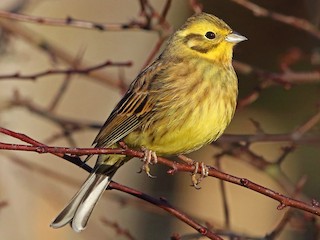
Where does the Yellowhammer live?
Emberiza citrinella
Spotted a bird? Identify it instantly with the Birdby app
Open the appThe Yellowhammer lives in specific habitats and regions. Knowing where, and when, to look improves your chances of a successful sighting.
Biomes
Temperate grasslands, shrublands, open woodlands, agricultural land, heathland, moorland.
Geographic range
Widespread across most of Europe and western Asia, from Ireland and Portugal east to western Siberia and Kazakhstan. Introduced to New Zealand.
Preferred environments
Prefers open, cultivated land with hedgerows, scattered bushes, and small trees. Also found in heathland, moorland edges, and open woodland clearings. Requires a mix of open ground for foraging and dense cover for nesting and roosting.
Elevation range
Typically found from sea level up to 1,000 meters, occasionally higher in some mountainous regions.
Where to look
Agricultural Land
Look in fields with hedgerows, especially those growing cereal crops. They often perch on fences or power lines bordering fields.
Heathland and Moorland Edges
Found in areas with scattered gorse, heather, and small trees, providing both cover and open foraging areas.
Open Woodlands and Clearings
Can be found in the edges of deciduous or mixed woodlands, particularly where there are clearings or rides.
Gardens (Winter)
In harsh winters, they may visit gardens with bird feeders, especially if seeds (like sunflower hearts or millet) are offered on the ground.
Field tips
- Listen for the song. The male's song is very distinctive and often the first indication of a Yellowhammer's presence. Listen for it from prominent perches.
- Scan prominent perches. Males frequently sing from the tops of bushes, hedgerows, fences, or power lines, making them relatively easy to spot.
- Look on the ground. Yellowhammers are primarily ground feeders. Scan the edges of fields, under hedgerows, and in stubble for foraging birds.
- Visit in the morning. They are most active and vocal in the early morning, especially during the breeding season.
- Be patient. While often conspicuous, they can also be shy. Find a good vantage point and wait quietly.
Migration
Mostly resident or short-distance migrants in western and central Europe. Northern and eastern populations are more migratory, moving south and west for the winter. They are partial migrants.
Explore the Yellowhammer
Identify birds anywhere
Free on iOS, Android, and Web. Photo & sound identification, full species database, and your personal life list.