
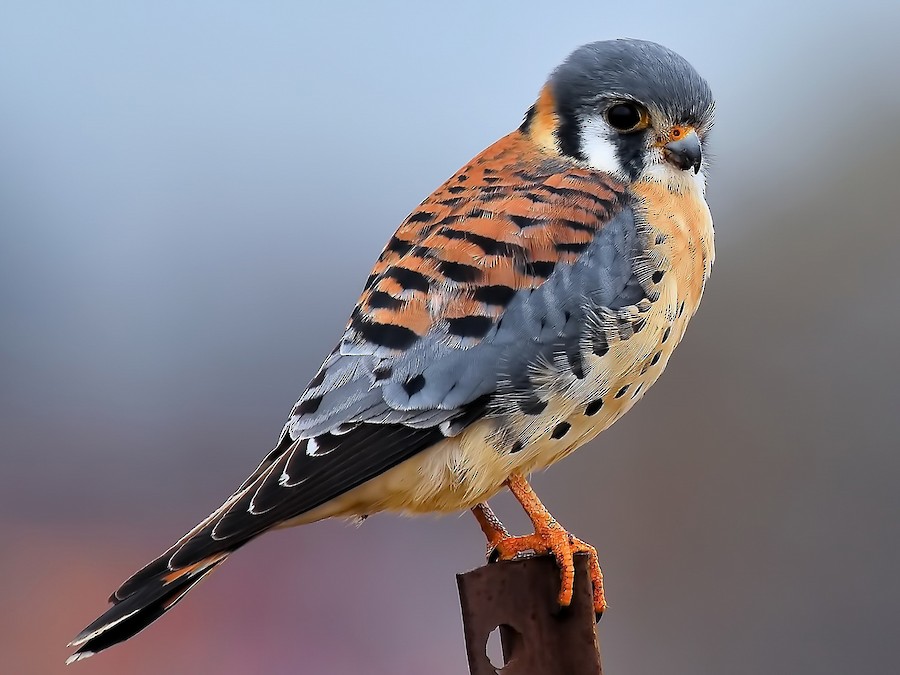
Where does the American Kestrel live?
Falco sparverius
Spotted a bird? Identify it instantly with the Birdby app
Open the appThe American Kestrel lives in specific habitats and regions. Knowing where, and when, to look improves your chances of a successful sighting.
Biomes
Grasslands, deserts, open woodlands, agricultural fields, urban and suburban areas.
Geographic range
Throughout the Americas, from Alaska and northern Canada south through the United States and Mexico, Central America, and into South America as far as Tierra del Fuego. Absent from dense forests and high arctic tundra.
Preferred environments
Open country with scattered trees, snags, or utility poles for perching, and suitable cavities for nesting. Often found near human habitation.
Elevation range
Sea level up to 4,500 meters (14,800 feet) in some parts of its range, though typically found at lower to mid-elevations.
Where to look
Open Countryside
Look in agricultural fields, pastures, and grasslands where prey is abundant and perches are available.
Roadsides
Often seen perched on telephone wires, utility poles, or fence posts along roadsides, especially in rural and suburban areas.
Urban/Suburban Areas
Can be found in parks, golf courses, and even city centers if suitable nesting cavities (e.g., in buildings) and foraging areas are present.
Woodland Edges
Found at the edges of open woodlands, where trees provide nesting sites and open areas offer hunting grounds.
Field tips
- Scan Perches. Actively scan utility wires, fence posts, and dead snags in open areas. Kestrels often perch conspicuously.
- Look for Hovering. Watch for small raptors hovering in place over fields or open ground, a key hunting technique for kestrels.
- Listen for Calls. Their distinctive 'klee-klee-klee' call can often alert you to their presence before you see them.
- Check Nest Boxes. In areas with active nest box programs for kestrels, check boxes during the breeding season.
- Observe Behavior. Look for sudden dives from perches or hovering positions, indicating a hunting attempt.
Migration
Northern populations are migratory, moving south for the winter. Southern populations are resident year-round. Migration occurs during the day, often along coastlines or mountain ranges. Some individuals may move short distances even in resident populations.
Explore the American Kestrel
Identify birds anywhere
Free on iOS, Android, and Web. Photo & sound identification, full species database, and your personal life list.