
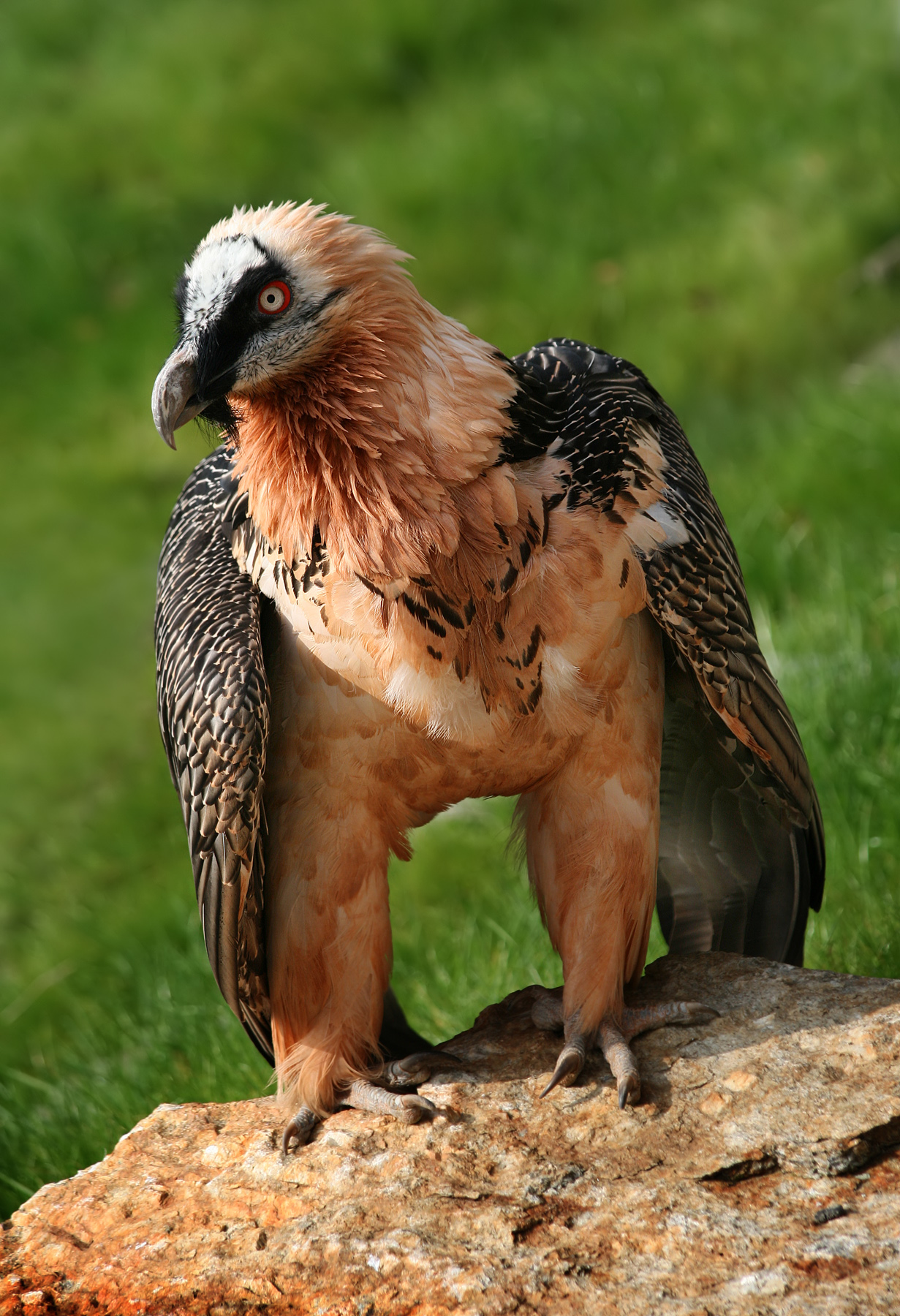
Where does the Bearded Vulture live?
Gypaetus barbatus
Spotted a bird? Identify it instantly with the Birdby app
Open the appThe Bearded Vulture lives in specific habitats and regions. Knowing where, and when, to look improves your chances of a successful sighting.
Biomes
High mountains, rocky cliffs, alpine meadows, arid and semi-arid mountainous regions.
Geographic range
Discontinuous distribution across Eurasia and Africa. Found in the Pyrenees, Alps (reintroduced), Balkans, Turkey, Caucasus, Central Asia, Himalayas, Tibet, and parts of East and Southern Africa.
Preferred environments
Steep, rugged mountain terrain with deep gorges, cliffs for nesting, and open areas for foraging. Requires access to ungulate carcasses for bones.
Elevation range
Typically found at elevations between 500-4,000 meters (1,600-13,000 ft), but can range up to 7,500 meters (24,600 ft) in the Himalayas.
Where to look
High Mountain Ranges
Focus on rugged, inaccessible mountain areas with steep cliffs and deep valleys. Key regions include the Pyrenees, Alps (reintroduction sites), Caucasus, Himalayas, and parts of East Africa (e.g., Simien Mountains).
National Parks and Protected Areas
Many populations are found within protected areas specifically established for their conservation, such as the Vanoise National Park (Alps), Ordesa y Monte Perdido National Park (Pyrenees), or Simien Mountains National Park (Ethiopia).
Field tips
- Scan the Skies. Bearded Vultures spend much of their day soaring. Use binoculars or a spotting scope to scan the skies above mountain ridges and valleys, especially during mid-morning to late afternoon when thermals are strong.
- Look for Carcasses. While they don't typically feed on fresh meat, they are attracted to ungulate carcasses for bones. Observing other scavengers (e.g., Griffon Vultures, ravens) might indicate a potential food source nearby, which could attract a Bearded Vulture.
- Visit Reintroduction Sites. In areas like the Alps, reintroduction programs have made them more predictable. Local conservation groups or park rangers can often provide information on recent sightings or known territories.
- Patience and Persistence. Bearded Vultures are rare and wide-ranging. Spotting one often requires considerable patience and spending extended periods in suitable habitat.
Migration
Mostly resident throughout its range. Juveniles may disperse widely from their natal areas, but adults typically remain within their established territories year-round.
Explore the Bearded Vulture
Identify birds anywhere
Free on iOS, Android, and Web. Photo & sound identification, full species database, and your personal life list.