
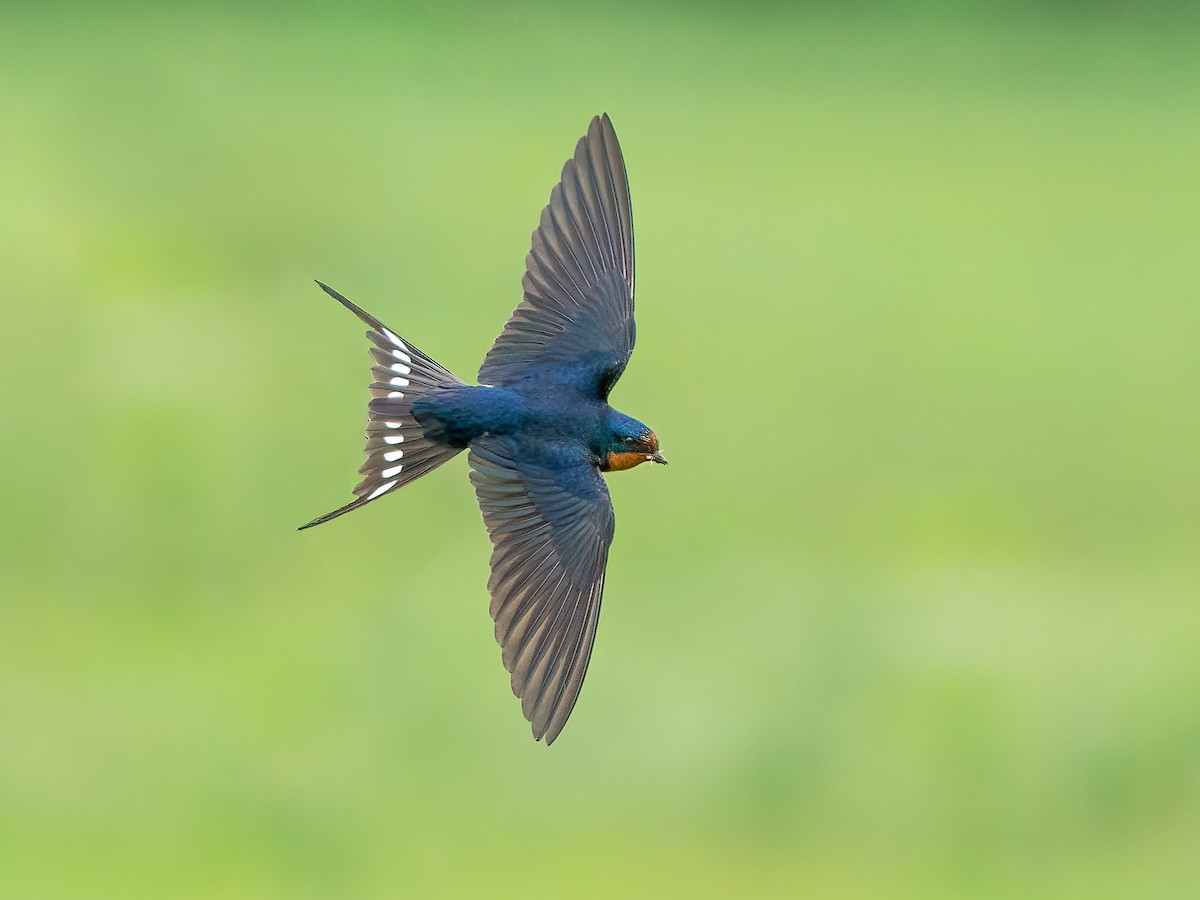
Where does the Barn Swallow live?
Hirundo rustica
Spotted a bird? Identify it instantly with the Birdby app
Open the appThe Barn Swallow lives in specific habitats and regions. Knowing where, and when, to look improves your chances of a successful sighting.
Biomes
Temperate grasslands, agricultural areas, open woodlands, savannas, and human-modified landscapes.
Geographic range
Breeds across most of the Northern Hemisphere, including North America, Europe, Asia, and parts of North Africa. Winters in the Southern Hemisphere, including South America, sub-Saharan Africa, and parts of southern Asia and northern Australia.
Preferred environments
Open country with access to water, often near human structures like barns, bridges, and houses for nesting. Requires open air space for foraging and mud for nest building.
Elevation range
From sea level up to approximately 3,000 meters, though typically found at lower elevations.
Where to look
Agricultural Areas
Look in and around barns, sheds, and other farm buildings where they often nest.
Open Fields and Pastures
They forage over open grassy areas, especially where livestock are present, attracting insects.
Near Water Bodies
Lakes, ponds, rivers, and coastal areas provide abundant insect prey and mud for nest building.
Bridges and Culverts
These structures offer sheltered sites for nesting, particularly in areas lacking traditional farm buildings.
Field tips
- Look up!. Barn Swallows spend most of their active time in the air. Scan the skies, especially over open areas.
- Visit farms or rural areas. Their strong association with human structures makes farms, stables, and rural outbuildings prime locations.
- Observe near water. They frequently skim over water to drink and catch emerging insects. Look for them at dawn and dusk.
- Listen for their song. Their distinctive warbling song can often alert you to their presence, even before you see them.
- Watch for mud nests. During breeding season, look for their characteristic mud cup nests attached to vertical surfaces under eaves or inside structures.
Migration
Long-distance migratory. Northern Hemisphere breeders migrate south for the winter, crossing vast distances, often thousands of kilometers. Migration occurs in large flocks, typically during the day.
Explore the Barn Swallow
Identify birds anywhere
Free on iOS, Android, and Web. Photo & sound identification, full species database, and your personal life list.