
How to identify the Barn Swallow
Hirundo rustica
Spotted a bird? Identify it instantly with the Birdby app
Open the appTo correctly identify the Barn Swallow (Hirundo rustica), check each of these features. Birds can be tricky: habit, habitat, and call often confirm a sighting that a single photo cannot.
Size at a glance
- Length
- 17-19 cm (including outer tail streamers of up to 7 cm)
- Wingspan
- 32-34.5 cm
- Weight
- 16-22 g
Physical features to check
- 1
Plumage
Overall feather coloration and pattern.
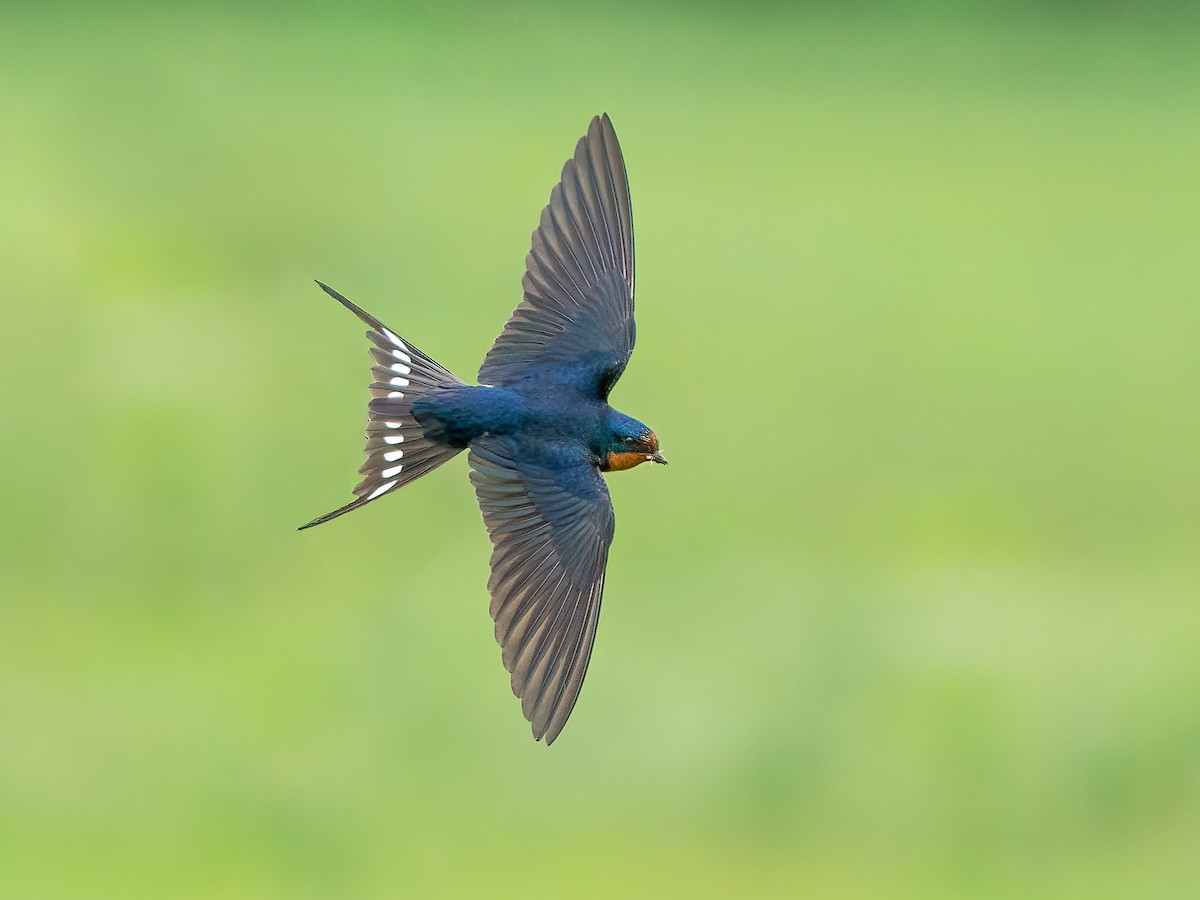
Adults have iridescent steel-blue upperparts, a rufous (chestnut) forehead and throat, separated from the creamy-white to buff underparts by a broad, dark blue breast band. The tail is deeply forked with long outer streamers, and white spots are visible on the inner webs of the tail feathers when spread.
- 2
Beak shape
Shape and color of the bill: a key field mark.
Small, flattened, and triangular, adapted for catching insects in flight; black in color.
- 3
Eye color
Iris color and any distinctive eye markings.
Dark brown.
- 4
Leg color
Leg and foot color.
Short, blackish legs and feet, adapted for perching rather than walking.
- 5
Distinguishing features
Standout features that separate this species.
Deeply forked tail with long streamers (especially in males), iridescent blue back, rufous face/throat, and dark breast band. White spots on the tail are a key field mark.
- 6
Juvenile appearance
How young birds differ from adults.
Juveniles are duller than adults, with browner upperparts, paler and less rufous underparts, and a shorter, less deeply forked tail with shorter streamers. The breast band is often less distinct.
- 7
Seasonal changes
Plumage variation between breeding and non-breeding seasons.
Plumage remains largely consistent throughout the year, though wear can make colors appear duller towards the end of the breeding season or migration. No distinct non-breeding plumage.
- 8
Sexual dimorphism
How males and females differ.
Males typically have longer, more prominent outer tail streamers than females, and often a slightly darker, more intense rufous on the throat and forehead. Females may have duller plumage and shorter streamers.
Key field marks
- Tail Shape. Look for the deeply forked tail with long, slender outer streamers, especially prominent in males. White spots on the inner webs of the tail feathers are visible when spread.
- Plumage Coloration. Note the iridescent steel-blue upperparts, contrasting with the rufous (chestnut) forehead and throat. A dark blue breast band separates the rufous throat from the creamy-white underparts.
- Flight Pattern. Observe its characteristic agile, acrobatic flight, often low over open fields or water, with frequent glides and sharp turns as it hunts insects.
- Habitat. Barn Swallows are almost always found in open country, often near water and human structures like barns, sheds, or bridges, which they use for nesting.
- Vocalization. Listen for its cheerful, warbling, twittering song, often ending with a distinctive 'squeaky gate' sound.
Explore the Barn Swallow
Identify birds anywhere
Free on iOS, Android, and Web. Photo & sound identification, full species database, and your personal life list.