
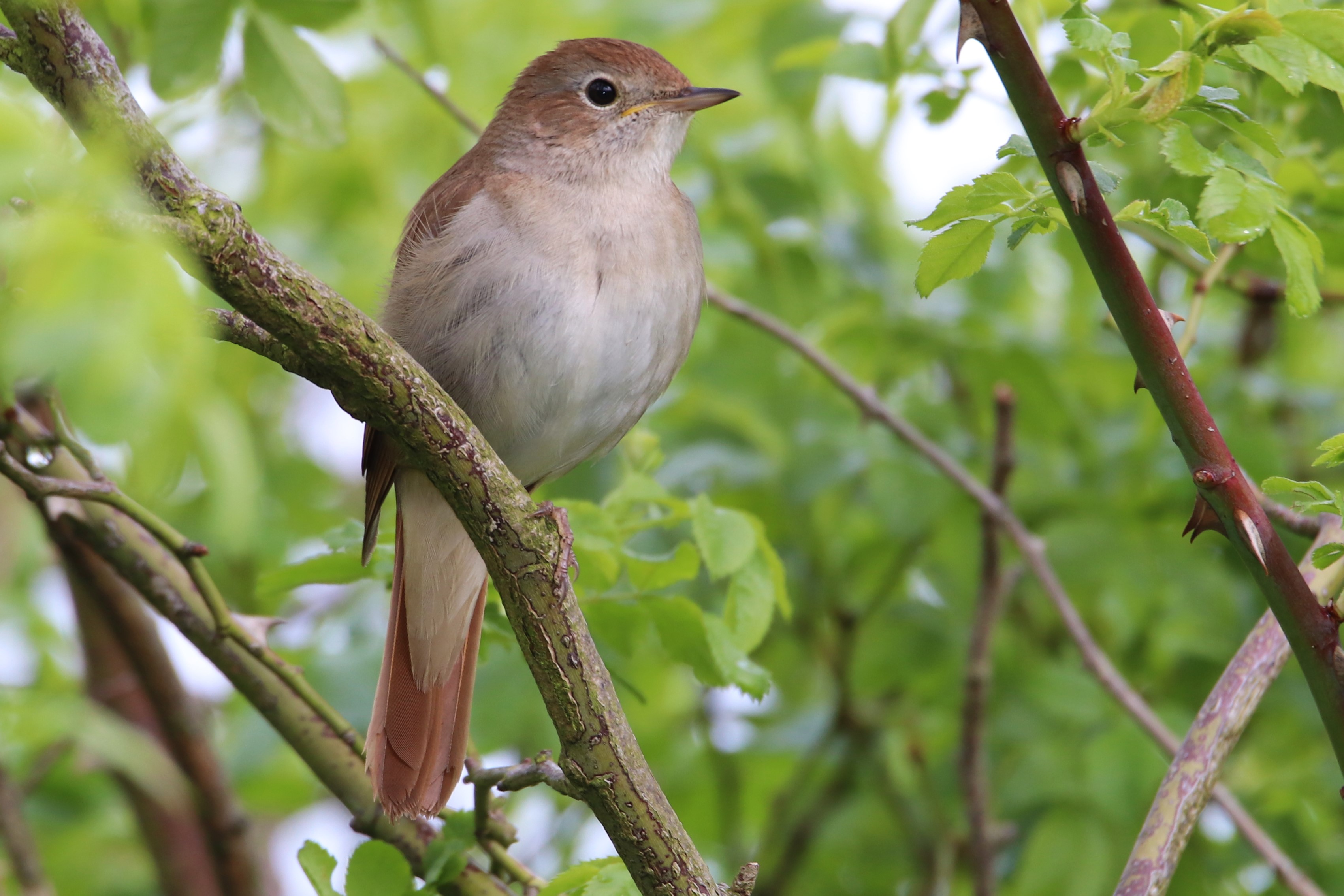
Where does the Common Nightingale live?
Luscinia megarhynchos
Spotted a bird? Identify it instantly with the Birdby app
Open the appThe Common Nightingale lives in specific habitats and regions. Knowing where, and when, to look improves your chances of a successful sighting.
Biomes
Temperate forests, shrublands, grasslands.
Geographic range
Breeds across most of Europe (west to Portugal, north to southern Scandinavia, east into western Asia, including the Caucasus and parts of Central Asia). Winters in sub-Saharan Africa, from Senegal east to Kenya and south to South Africa.
Preferred environments
Dense thickets, scrubland, coppices, hedgerows, woodland edges, riverine forests, parks, and large gardens with dense undergrowth. It favors moist soil and often occurs near water sources. Requires dense horizontal cover for nesting and foraging, often with scattered tall trees for song perches.
Elevation range
Typically lowlands to mid-altitudes, up to 1,500-2,000 meters in some parts of its breeding range.
Where to look
Woodland Edges
Areas where woodlands transition into clearings or fields, offering both cover and open foraging opportunities.
Dense Thickets & Scrub
Brambly patches, gorse, and other dense shrubbery are prime habitats for nesting and concealment.
Riverine Vegetation
Brushy banks and undergrowth along rivers and streams provide preferred moist conditions and insect availability.
Parks & Large Gardens
Well-vegetated urban and suburban green spaces with neglected corners and dense shrubberies can host Nightingales.
Field tips
- Listen at Dawn/Dusk (or Night). This is when the male's song is most prominent and can lead you to its general location.
- Be Patient and Still. Nightingales are shy. Find a suitable habitat, remain quiet and still, and let the bird reveal itself. Use your ears more than your eyes initially.
- Scan Low Vegetation. If you hear one, try to spot movement within the lower branches and dense undergrowth. They rarely perch high in the open.
- Look for Tail Action. If you glimpse a bird, watch for the characteristic cocking and fanning of its rufous-chestnut tail, especially when it's agitated or moving through cover.
Migration
Long-distance nocturnal migrant. Migrates south to its African wintering grounds from late summer to autumn (August-October) and returns to breeding grounds in spring (April-May). They undertake substantial trans-Saharan journeys.
Explore the Common Nightingale
Identify birds anywhere
Free on iOS, Android, and Web. Photo & sound identification, full species database, and your personal life list.