
How to identify the Common Nightingale
Luscinia megarhynchos
Spotted a bird? Identify it instantly with the Birdby app
Open the appTo correctly identify the Common Nightingale (Luscinia megarhynchos), check each of these features. Birds can be tricky: habit, habitat, and call often confirm a sighting that a single photo cannot.
Size at a glance
- Length
- 15-16.5 cm
- Wingspan
- 23-26 cm
- Weight
- 16-27 g
Physical features to check
- 1
Plumage
Overall feather coloration and pattern.
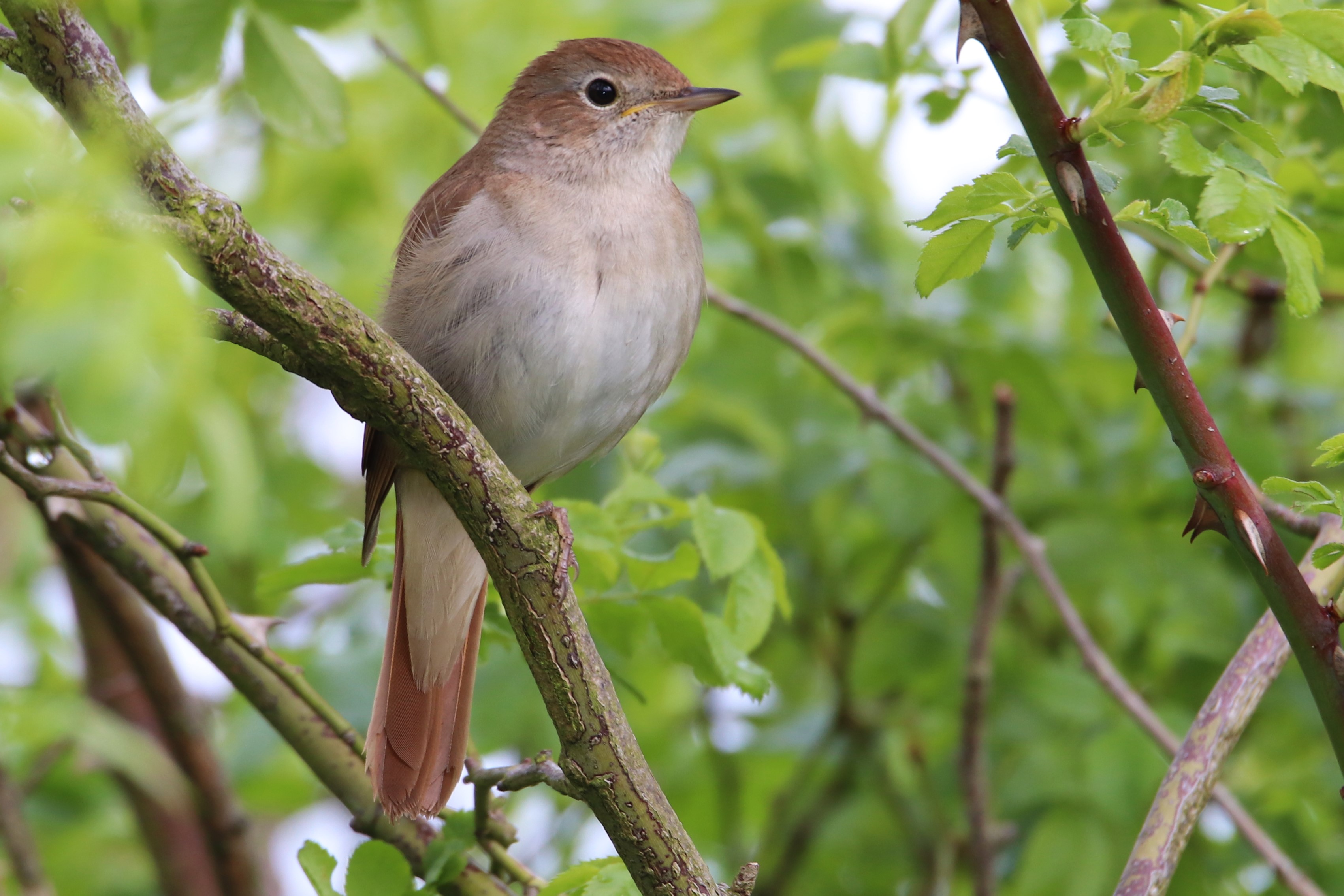
The adult Common Nightingale has plain, warm brown upperparts (back, wings, and head), with a slightly rufous-chestnut rump and tail. The underparts are grayish-white, often buffier on the flanks and undertail coverts. The breast may have a faint mottling. There is a pale yellowish eye-ring and a dusky lore line, but otherwise, the head lacks prominent markings.
- 2
Beak shape
Shape and color of the bill: a key field mark.
Small, slender, and pointed, dark grayish-brown.
- 3
Eye color
Iris color and any distinctive eye markings.
Dark brown.
- 4
Leg color
Leg and foot color.
Dusky pinkish-brown to dark gray.
- 5
Distinguishing features
Standout features that separate this species.
Its most distinctive feature is its rufous-chestnut tail, which is often fanned and held cocked when agitated. Its overall plain brown plumage with the contrasting reddish tail is a key identification mark. It typically holds its body horizontally or slightly angled upwards.
- 6
Juvenile appearance
How young birds differ from adults.
Juveniles are mottled overall, appearing scalloped dark brown and tawny on the upperparts and breast. They still possess the rufous-chestnut tail. This mottled plumage is lost after the post-juvenile molt.
- 7
Seasonal changes
Plumage variation between breeding and non-breeding seasons.
No significant seasonal changes in adult plumage outside of plumage wear. Fresh plumage after post-breeding molt may appear slightly richer brown and less worn.
- 8
Sexual dimorphism
How males and females differ.
No significant sexual dimorphism in plumage; males and females look alike. Males tend to be slightly larger on average, but this is not discernible in the field.
Key field marks
- Song. The most effective identification method. Listen for its powerful, varied song with crescendo trills ('churr-churr-churr') and fluty whistles, often at night or dawn/dusk. The sheer complexity and volume are distinctive.
- Plumage. Look for plain, warm brown upperparts with a contrasting rufous-chestnut rump and tail. Underparts are off-white/grayish-buff. Lack of strong facial markings (unlike a Robin).
- Behavior. Observe its secretive nature, usually staying hidden in dense undergrowth. When seen, it often holds its tail slightly cocked and may flick it. Forages low down or on the ground.
- Habitat. Search in dense, bushy vegetation, thickets, woodland edges, and areas with good ground cover, often near water. If you hear a spectacular song from such a habitat, it's very likely a Nightingale.
Explore the Common Nightingale
Identify birds anywhere
Free on iOS, Android, and Web. Photo & sound identification, full species database, and your personal life list.