
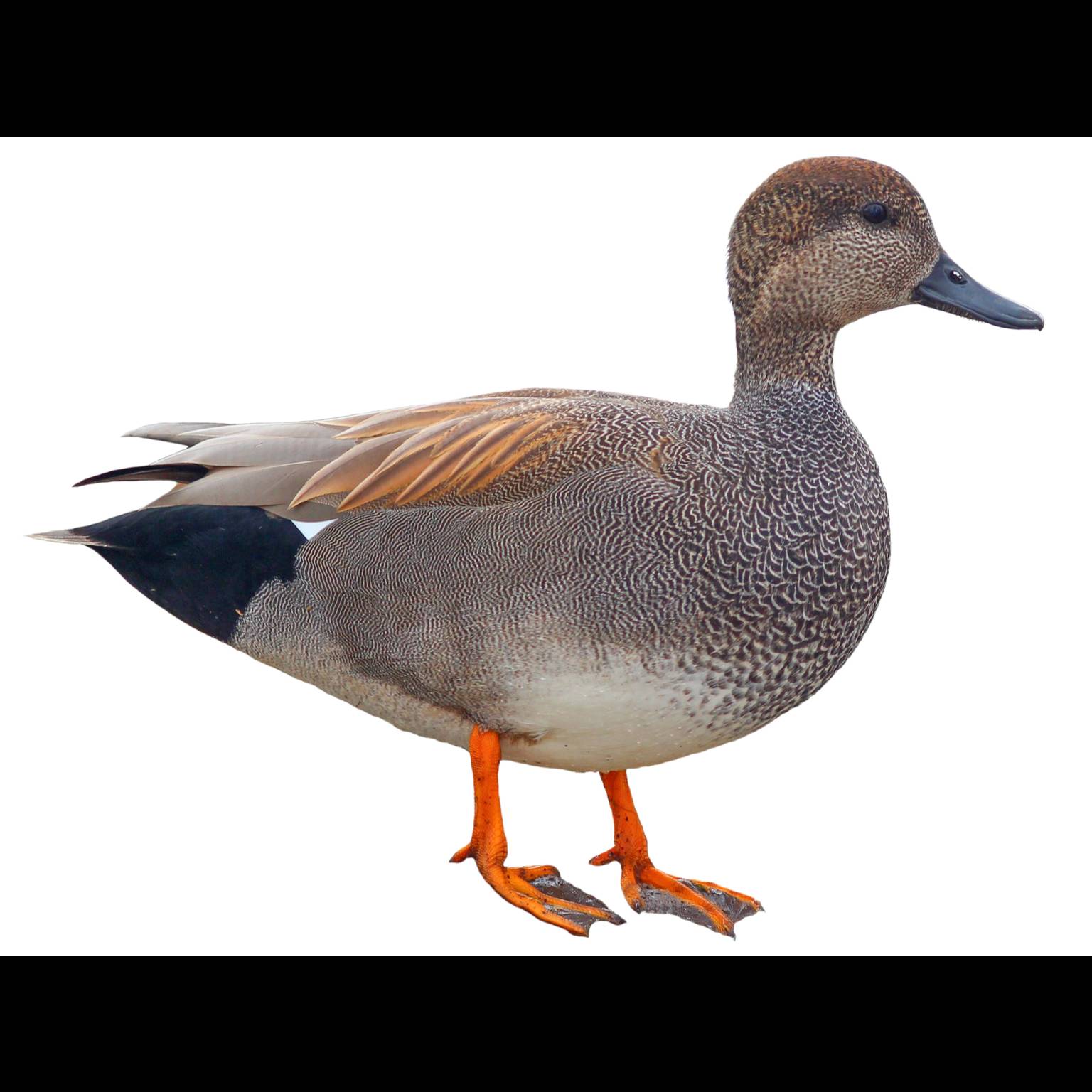
Where does the Gadwall live?
Mareca strepera
Spotted a bird? Identify it instantly with the Birdby app
Open the appThe Gadwall lives in specific habitats and regions. Knowing where, and when, to look improves your chances of a successful sighting.
Biomes
Wetlands, marshes, shallow lakes, slow-moving rivers, and estuaries.
Geographic range
Breeds across temperate North America, Europe, and Asia. Winters in southern North America, Central America, northern Africa, southern Europe, and southern Asia.
Preferred environments
Prefers shallow, freshwater wetlands with abundant emergent and submerged vegetation, often with muddy bottoms. Less common in highly acidic or saline waters.
Elevation range
Primarily lowlands, up to approximately 1,000 meters (3,300 feet) in some areas.
Where to look
Freshwater Marshes
Areas with emergent vegetation like cattails and reeds, and shallow open water.
Shallow Lakes and Ponds
Especially those with abundant aquatic vegetation and muddy bottoms.
Slow-moving Rivers and Backwaters
Areas with calm water and dense shoreline vegetation.
Estuaries and Coastal Lagoons
During migration and winter, they can be found in brackish waters, particularly those with extensive mudflats and seagrass beds.
Field tips
- Look for the White Speculum. This is the most reliable field mark. Even at a distance, the white patch on the wing can help distinguish it from other ducks, especially in flight.
- Observe Feeding Behavior. Gadwalls are dabblers. Watch for ducks tipping up in shallow water, exposing their rear ends, as they forage for submerged vegetation.
- Study Female Plumage Carefully. Distinguishing female Gadwalls from female Mallards requires attention to subtle differences in head shape, bill color, and the crucial white speculum.
- Listen for Calls. Their calls are generally quieter than Mallards. Learning the male's whistle and the female's softer quack can aid identification, especially in dense cover.
- Check for Black Rump (Males). In breeding males, the contrasting black rump is a good identifier, especially when the bird is preening or in flight.
Migration
Migratory across much of its range. Northern populations move south for winter, while southern populations may be resident or undertake shorter movements. Migration occurs in broad fronts, often at night.
Explore the Gadwall
Identify birds anywhere
Free on iOS, Android, and Web. Photo & sound identification, full species database, and your personal life list.