
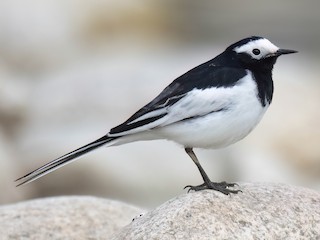
Where does the Pied Wagtail live?
Motacilla alba
Spotted a bird? Identify it instantly with the Birdby app
Open the appThe Pied Wagtail lives in specific habitats and regions. Knowing where, and when, to look improves your chances of a successful sighting.
Biomes
Temperate grasslands, urban and suburban areas, agricultural land, wetlands, coastal areas.
Geographic range
Primarily the British Isles (Great Britain and Ireland). Other subspecies of Motacilla alba are widespread across Europe, Asia, and parts of North Africa.
Preferred environments
Open, short-grass areas, often near water bodies such as rivers, lakes, ponds, and reservoirs. Also common in parks, gardens, playing fields, car parks, farmyards, and urban environments where insects are abundant and there are open spaces for foraging.
Elevation range
Sea level up to approximately 1,000 meters, though typically found at lower elevations.
Where to look
Urban and Suburban Areas
Parks, gardens, car parks, playing fields, industrial estates, and even city centers are common places to find them, especially in winter when they form communal roosts.
Agricultural Land
Farmyards, fields with short grass, and areas around livestock often attract Pied Wagtails due to abundant insect prey.
Water Bodies
Riverbanks, lake shores, reservoirs, and ponds provide foraging opportunities for aquatic insects.
Coastal Areas
Beaches, estuaries, and coastal grasslands can also host Pied Wagtails.
Field tips
- Look for movement. Their constant tail wagging and quick, darting movements on the ground make them relatively easy to spot, even from a distance.
- Listen for calls. Their distinctive 'chissick' call is often heard before the bird is seen, especially when they are flying overhead.
- Check open, short-grass areas. Focus your search on lawns, playing fields, and paved areas where they forage for insects.
- Visit communal roosts in winter. In colder months, large numbers can gather at specific roost sites, often in city centers (e.g., on buildings, in trees with artificial lighting) or reedbeds, offering excellent viewing opportunities.
- Observe near water. Pied Wagtails frequently forage along the edges of water bodies.
Migration
Resident in much of the British Isles, though some northern populations may move south for winter. Continental White Wagtails (M. a. alba) are migratory, passing through or wintering in the UK, which can make identification challenging. British-bred Pied Wagtails are largely sedentary.
Explore the Pied Wagtail
Identify birds anywhere
Free on iOS, Android, and Web. Photo & sound identification, full species database, and your personal life list.