
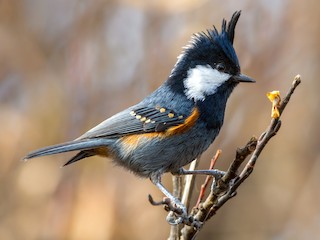
Where does the Coal Tit live?
Periparus ater
Spotted a bird? Identify it instantly with the Birdby app
Open the appThe Coal Tit lives in specific habitats and regions. Knowing where, and when, to look improves your chances of a successful sighting.
Biomes
Temperate forests, coniferous forests, mixed woodlands, parks, and gardens.
Geographic range
Widespread across Eurasia, from Western Europe to Japan, and in parts of North Africa. Absent from Iceland and parts of northern Scandinavia.
Preferred environments
Prefers coniferous forests (spruce, pine, fir) but also inhabits mixed woodlands, parks, and large gardens, especially those with mature trees. Often found in the canopy and mid-story.
Elevation range
Sea level up to 2,000 meters, sometimes higher in mountainous regions.
Where to look
Coniferous Forests
The primary habitat, especially spruce, pine, and fir forests, where they forage among needles and cones.
Mixed Woodlands
Also common in woodlands with a mix of deciduous and coniferous trees.
Parks and Gardens
Can be found in urban and suburban areas with mature trees, especially if conifers are present.
Bird Feeders
Will visit feeders, particularly in winter, for seeds and suet.
Field tips
- Look in the canopy. Coal Tits often forage high in trees, especially conifers, meticulously searching for insects and seeds.
- Listen for their song. Their distinctive 'pee-choo' song is a good way to locate them, especially during spring.
- Observe mixed flocks. In winter, join mixed-species tit flocks; Coal Tits are often part of these groups.
- Check bird feeders. They are regular visitors to feeders, particularly those offering sunflower seeds or suet.
- Watch for food caching. In autumn, observe them hiding seeds in bark crevices, a characteristic behavior.
Migration
Mostly resident throughout its range. Some northern populations may undertake short-distance altitudinal or irruptive movements in harsh winters or when food resources are scarce.
Explore the Coal Tit
Identify birds anywhere
Free on iOS, Android, and Web. Photo & sound identification, full species database, and your personal life list.