
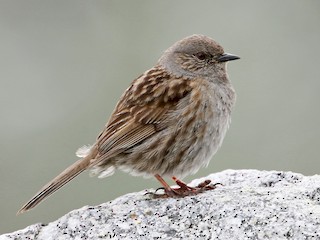
Where does the Dunnock live?
Prunella modularis
Spotted a bird? Identify it instantly with the Birdby app
Open the appThe Dunnock lives in specific habitats and regions. Knowing where, and when, to look improves your chances of a successful sighting.
Biomes
Temperate forests, woodlands, scrublands, hedgerows, gardens, parks, and urban green spaces.
Geographic range
Widespread across Europe, from the Atlantic coast eastwards through Russia to the Ural Mountains. Also found in parts of the Middle East and North Africa. Introduced to New Zealand.
Preferred environments
Dense undergrowth, thickets, hedges, shrubbery, and areas with good ground cover. They prefer habitats with a mix of open ground for foraging and dense vegetation for cover and nesting.
Elevation range
Sea level up to 2,000 meters in some mountainous regions, but typically found at lower elevations.
Where to look
Gardens and Parks
Common in suburban and urban gardens, especially those with dense shrubbery, hedges, and ground cover. Look near the base of hedges or under bushes.
Woodland Edges and Clearings
Frequents the edges of deciduous and coniferous woodlands, particularly where there is a thick understory or bramble patches.
Hedgerows and Farmland
Abundant in agricultural landscapes with extensive hedgerow networks, providing both cover and foraging opportunities.
Scrubland
Any area with dense scrub, gorse, or bramble thickets is a good place to find Dunnocks.
Field tips
- Be Patient and Quiet. Dunnocks are often shy and inconspicuous. Sit quietly near dense cover and wait for them to emerge to forage.
- Look Low. They spend most of their time foraging on the ground or very low in vegetation. Focus your attention on the base of hedges and bushes.
- Listen for the Song. Their distinctive song is often the first indication of their presence, even if they are hidden from view.
- Check Bird Feeders. In winter, they may visit ground feeders or feed under hanging feeders, picking up dropped seeds.
Migration
Northern and eastern populations are migratory, moving south and west for the winter. Western and southern European populations are largely resident or undertake short-distance movements. British and Irish populations are mostly resident.
Explore the Dunnock
Identify birds anywhere
Free on iOS, Android, and Web. Photo & sound identification, full species database, and your personal life list.