
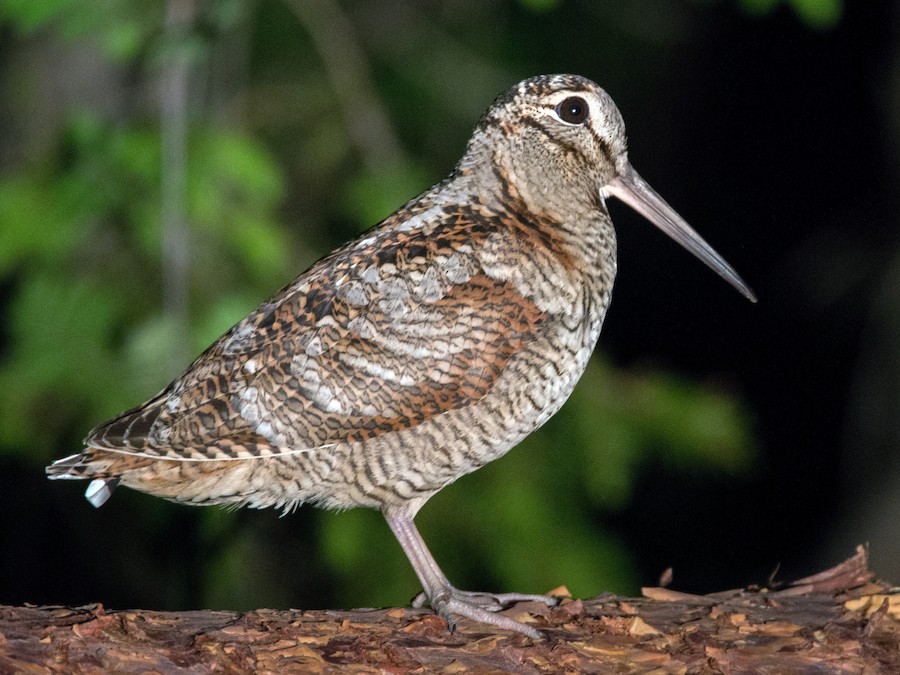
Where does the Eurasian Woodcock live?
Scolopax rusticola
Spotted a bird? Identify it instantly with the Birdby app
Open the appThe Eurasian Woodcock lives in specific habitats and regions. Knowing where, and when, to look improves your chances of a successful sighting.
Biomes
Temperate and boreal forests, mixed woodlands, coniferous forests, and dense scrub.
Geographic range
Breeds across a wide range of Eurasia, from Western Europe (including the UK and Ireland) eastward through Russia and Siberia to Japan. Winters in Western and Southern Europe, North Africa, and South Asia.
Preferred environments
Prefers damp, deciduous or mixed woodlands with dense undergrowth, soft soil for probing, and open clearings for display flights. Often found near streams, bogs, or wet areas.
Elevation range
Typically found from sea level up to 2,500 meters (8,200 ft), depending on the region and season.
Where to look
Damp Woodlands
Look in mature deciduous or mixed woodlands with dense undergrowth, especially areas with soft, moist soil for probing.
Forest Edges and Clearings
During the breeding season, males perform their 'roding' flights over forest edges, rides, and small clearings at dusk and dawn.
Wet Areas
Areas near streams, bogs, or marshy patches within woodlands are often favored due to the abundance of earthworms.
Field tips
- Timing is Key. The best time to observe Eurasian Woodcocks is at dusk or dawn, particularly during the breeding season (March-July), when males perform their 'roding' display flights. They are largely nocturnal feeders.
- Listen Carefully. Learn the distinctive 'orrrt-orrrt-orrrt psiss-psiss-psiss' call of the roding male. This is often the first indication of their presence.
- Be Patient and Quiet. Woodcocks are extremely secretive and well-camouflaged. Walk slowly and quietly through suitable habitat, scanning the ground. If you flush one, it will likely fly a short distance and drop back into cover.
- Look for Signs. Look for probing holes in soft ground, which indicate recent feeding activity. These are small, conical holes made by their long bills.
- Use Binoculars. Even if you spot one, its camouflage can make it hard to discern details. Binoculars are essential for observing its unique features.
Migration
Northern and eastern populations are migratory, moving south and west for the winter. Western and southern populations are largely resident or undertake short-distance movements. Migration occurs mainly at night.
Explore the Eurasian Woodcock
Identify birds anywhere
Free on iOS, Android, and Web. Photo & sound identification, full species database, and your personal life list.