
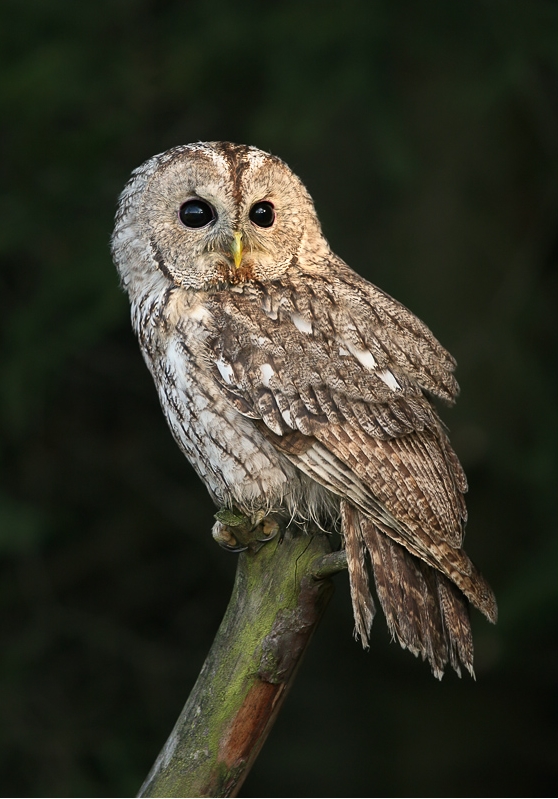
Where does the Tawny Owl live?
Strix aluco
Spotted a bird? Identify it instantly with the Birdby app
Open the appThe Tawny Owl lives in specific habitats and regions. Knowing where, and when, to look improves your chances of a successful sighting.
Biomes
Temperate forests, woodlands, parks, large gardens, and urban areas with mature trees.
Geographic range
Widespread across Europe, from the Iberian Peninsula to Western Siberia, and south to North Africa and parts of the Middle East and Central Asia. Absent from Ireland and some northern parts of Scandinavia.
Preferred environments
Deciduous and mixed woodlands, mature coniferous plantations, suburban parks, and large gardens with old trees for nesting and roosting. Requires dense canopy cover and open understory for hunting.
Elevation range
Sea level up to approximately 2,000 meters, depending on local conditions and availability of suitable habitat.
Where to look
Mature Woodlands
Deciduous and mixed woodlands with old, hollow trees are prime habitats.
Urban Parks and Gardens
Large parks and gardens with mature trees, especially those with some undisturbed areas, can host Tawny Owls.
Cemeteries
Old cemeteries with large, established trees often provide suitable nesting and roosting sites.
Rural Areas with Tree Cover
Farmsteads with copses, hedgerows, and scattered mature trees can also support populations.
Field tips
- Listen at Dusk and Dawn. The best way to detect Tawny Owls is by listening for their calls, particularly the male's hoot, during the twilight hours or throughout the night.
- Look for Pellets. Check the base of large trees or potential roosting sites for owl pellets (regurgitated indigestible prey remains). These indicate owl presence.
- Scan Tree Trunks. During the day, Tawny Owls often roost pressed against tree trunks or in dense ivy, using their camouflage. Look for their distinctive shape and dark eyes.
- Use a Red-Light Torch. If searching at night, a red-light torch can help you see without disturbing the owl's natural behavior or vision.
- Be Patient and Quiet. Tawny Owls are shy and well-camouflaged. Patience and minimal disturbance are key to observing them.
Migration
Sedentary and non-migratory throughout its range. Young birds disperse from their natal territories in autumn to establish their own territories.
Explore the Tawny Owl
Identify birds anywhere
Free on iOS, Android, and Web. Photo & sound identification, full species database, and your personal life list.