
Spotted a bird? Identify it instantly with the Birdby app
Open the appAbout
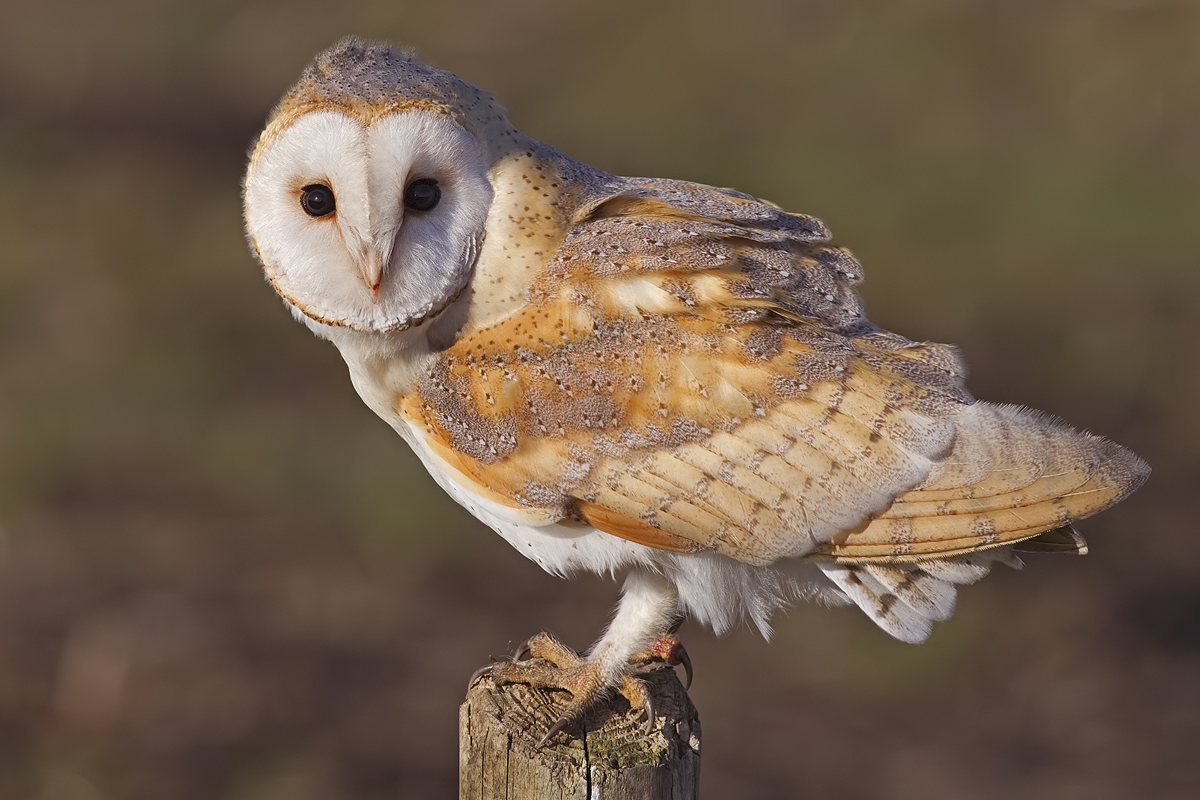
The Barn Owl (Tyto alba) is the most widely distributed species of owl in the world and one of the most widespread of all bird species. It is known for its distinctive heart-shaped facial disc, silent flight, and nocturnal hunting habits. Barn Owls are highly effective predators of small mammals, playing a crucial ecological role in pest control.
Size & lifespan
- Length
- 32-40 cm (12.5-16 in)
- Wingspan
- 100-125 cm (39-49 in)
- Weight
- 250-550 g (8.8-19.4 oz)
- Lifespan
- 1-2 years in the wild (up to 15-20 years in captivity)
- Diet
- Carnivore (primarily small mammals, especially voles, shrews, and mice; occasionally small birds, insects, or amphibians)
Physical characteristics
- Plumage
- Upperparts are typically a mix of buff and orange-brown, finely speckled with grey and white. Underparts are pure white to buff, often with small dark spots, which can vary geographically. The facial disc is a distinctive heart-shape, pure white to pale buff, bordered by a rufous-brown rim.
- Beak shape
- Small, hooked, and pale yellowish-horn to ivory in color, largely concealed by facial feathers.
- Eye color
- Small, dark, and beady, set within the facial disc.
- Leg color
- Long, feathered legs with pale greyish-brown tarsi and dark grey talons.
- Distinguishing features
- Heart-shaped white facial disc, dark eyes, pale underparts, and silent, buoyant flight. The lack of ear tufts distinguishes it from many other owl species.
- Juvenile appearance
- Juveniles resemble adults but may have softer, fluffier plumage and a less defined facial disc. They attain adult plumage after their first molt.
- Seasonal changes
- No significant seasonal plumage changes. Plumage remains consistent year-round, though wear and tear can make feathers appear duller before molting.
- Sexual dimorphism
- Females are typically slightly larger and heavier than males, and often have more numerous and darker spots on their underparts and a richer rufous wash on the chest. Males tend to be whiter underneath with fewer spots.
How to identify
- 1
Facial Disc
Look for the unmistakable heart-shaped white or pale buff facial disc, which is a key identifier for all Tyto owls.
- 2
Plumage Coloration
Observe the pale, often pure white or buffy underparts, contrasting with the golden-buff and grey mottled upperparts. The amount of spotting on the belly can vary but is a good general indicator.
- 3
Eyes
Note the small, dark, beady eyes set within the pale facial disc. This contrasts with the larger, often yellow eyes of many other owl species.
- 4
Flight Style
Watch for its silent, buoyant, and almost moth-like flight, often low over open fields. It appears to float effortlessly.
- 5
Vocalization
Listen for its distinctive, drawn-out, hissing 'shreeee' or 'kreeee' screech, especially at night.
- 6
Roosting/Nesting Sites
Check old barns, silos, abandoned buildings, tree hollows, and cliff ledges for roosting or nesting individuals, often indicated by whitewash (droppings) or pellets below.
Habitat & range
- Biomes
- Grasslands, agricultural fields, open woodlands, marshes, deserts, and suburban areas.
- Geographic range
- Nearly cosmopolitan, found on all continents except Antarctica. Widely distributed across Europe, Africa, Asia, Australasia, and the Americas. Absent from polar and desert regions, and some oceanic islands.
- Elevation range
- Sea level up to 4,000 meters (13,000 ft), though most common in lowlands and agricultural areas.
- Preferred environments
- Open country with scattered trees, barns, old buildings, silos, cliffs, and tree hollows for roosting and nesting. Requires access to open hunting grounds with abundant small mammal prey.
Behavior
- Activity time
- Nocturnal, becoming active at dusk and hunting throughout the night. Occasionally seen hunting at dawn or even during the day, especially when feeding young or during periods of low prey availability.
- Feeding habits
- Primarily nocturnal hunters, using their exceptional hearing and silent flight to locate prey in complete darkness. They typically hunt by flying low over open ground, hovering, or perching and dropping onto unsuspecting prey. Prey is swallowed whole, and indigestible parts are regurgitated as pellets.
- Social behavior
- Generally solitary or found in pairs, especially during the breeding season. Roost communally in some areas, particularly during winter or in areas with limited suitable roosting sites.
- Flight pattern
- Silent, buoyant, and moth-like flight with deep, slow wingbeats. Often glides for long distances. The leading edge of the primary feathers has a comb-like serration that muffles sound.
- Migration pattern
- Mostly resident throughout its range, but northern populations may undertake short-distance movements or irruptions in response to prey availability or harsh weather. Some populations in North America and Europe show partial migration.
- Territoriality
- Pairs defend a breeding territory, which can vary in size depending on prey density. Males may perform aerial displays to defend territory and attract mates.
Song & calls
- Song
- Barn Owls do not have a true song. Their primary vocalization is a long, drawn-out, hissing screech, often described as a 'shreeee' or 'kreeee' call, which can be quite loud and eerie.
- Call
- In addition to the screech, they produce various other sounds including hisses, snores, clicks, and gurgles, especially around the nest. Young owls make a persistent, raspy 'chittering' or 'snoring' sound when begging for food.
- When they vocalize
- Most vocal during the breeding season, particularly at night. Young owls are very vocal when hungry.
Breeding & reproduction
- Breeding season
- Highly variable depending on geographic location and prey availability. Can breed year-round in tropical regions, but typically spring to late summer in temperate zones (e.g., March-August in North America and Europe). May have multiple broods in a good year.
- Nesting habits
- Does not build a traditional nest. Lays eggs directly on a layer of regurgitated pellets in dark, sheltered locations such as tree hollows, cliff crevices, abandoned buildings (barns, silos), nest boxes, and occasionally caves. Nests are often reused year after year.
- Clutch size
- 4-7 eggs (average), but can range from 2 to 18 depending on food availability.
- Egg description
- Typically 4-7 (range 2-18) pure white, elliptical eggs, laid at intervals of 2-3 days. Eggs are smooth and non-glossy.
- Incubation period
- 29-34 days, primarily by the female.
- Fledging period
- 50-60 days. Young owls remain dependent on parents for several weeks after fledging.
- Parental care
- Female incubates and broods the young, while the male provides food for both the female and the owlets. Both parents participate in feeding the young after they are older.
Where to find
Agricultural Areas
Look in open farmland, pastures, and meadows, especially those with old barns, silos, or outbuildings.
Open Countryside
Scan grasslands, marshes, and scrublands at dusk and dawn, particularly where there are suitable roosting sites nearby.
Abandoned Buildings
Check the interiors of old, disused barns, churches, and other structures, as they are favored roosting and nesting sites.
Tree Hollows/Cliffs
In more natural settings, inspect large tree hollows or crevices in cliffs.
Field tips
- Time of Day. Barn Owls are primarily nocturnal, so the best times to spot them are at dusk, throughout the night, and at dawn. Occasionally, they hunt during the day, especially when feeding young.
- Listen for Calls. Their distinctive screech is often the first indication of their presence. Listen carefully on still nights.
- Look for Pellets. Barn Owls regurgitate pellets containing indigestible prey remains. Finding these under potential roosts or nest sites is a strong indicator of their presence.
- Use a Spotlight (responsibly). If observing at night, a red-filtered spotlight can help locate them without disturbing their hunting behavior. Always maintain a respectful distance.
- Check Nest Boxes. In areas with active conservation efforts, check designated Barn Owl nest boxes, often placed in suitable habitats.
Similar species
Eastern Grass Owl
Tyto longimembris
The Eastern Grass Owl is very similar in appearance but typically has darker, more streaked underparts and longer legs. It is found in grasslands of Asia and Australia, often in wetter habitats. Field identification can be challenging where ranges overlap.
Western Barn Owl (subspecies)
Tyto alba alba
While a subspecies, it's worth noting that the 'Western Barn Owl' (Tyto alba alba) found in Europe and North Africa is typically whiter underneath with fewer spots compared to the 'American Barn Owl' (Tyto alba pratincola) which often has more buffy underparts and more spotting. These are subtle differences and part of the species' overall variation.
Short-eared Owl
Asio flammeus
The Short-eared Owl has a rounder head, yellow eyes, and small ear tufts (though often not visible). Its facial disc is less heart-shaped and more streaked. It often hunts during the day and has a more erratic, buoyant flight with deeper wingbeats. Plumage is generally darker and more streaked brown.
Quick facts
- Global Distribution:
- Most widespread owl species globally
- Hunting Strategy:
- Exceptional hearing for silent, nocturnal hunting
- Facial Feature:
- Distinctive heart-shaped facial disc
- Dietary Impact:
- Crucial natural pest control, consuming vast numbers of rodents
- Vocalization:
- Known for its eerie, hissing screech
Fun facts
- A single Barn Owl family can consume up to 1,000 rodents in a year, making them incredibly valuable for agricultural pest control.
- Their ears are asymmetrically placed on their head, which helps them pinpoint the exact location of prey in complete darkness by detecting minute differences in sound arrival time.
- The Barn Owl's silent flight is due to specialized feather structures, including serrations on the leading edge of their primary feathers and a velvety surface on their flight feathers.
- Barn Owls are sometimes referred to as 'Ghost Owls' or 'Death Owls' due to their pale appearance, silent flight, and nocturnal habits, which historically led to superstitions.
- They do not hoot like typical owls; their primary call is a long, drawn-out screech.
Scientific classification
- Kingdom
- Animalia
- Phylum
- Chordata
- Class
- Aves
- Order
- Strigiformes
- Family
- Tytonidae
- Genus
- Tyto
- Species
- Tyto alba
Explore the Barn Owl
Identify birds anywhere
Free on iOS, Android, and Web. Photo & sound identification, full species database, and your personal life list.