
How to identify the Barn Owl
Tyto alba
Spotted a bird? Identify it instantly with the Birdby app
Open the appTo correctly identify the Barn Owl (Tyto alba), check each of these features. Birds can be tricky: habit, habitat, and call often confirm a sighting that a single photo cannot.
Size at a glance
- Length
- 32-40 cm (12.5-16 in)
- Wingspan
- 100-125 cm (39-49 in)
- Weight
- 250-550 g (8.8-19.4 oz)
Physical features to check
- 1
Plumage
Overall feather coloration and pattern.
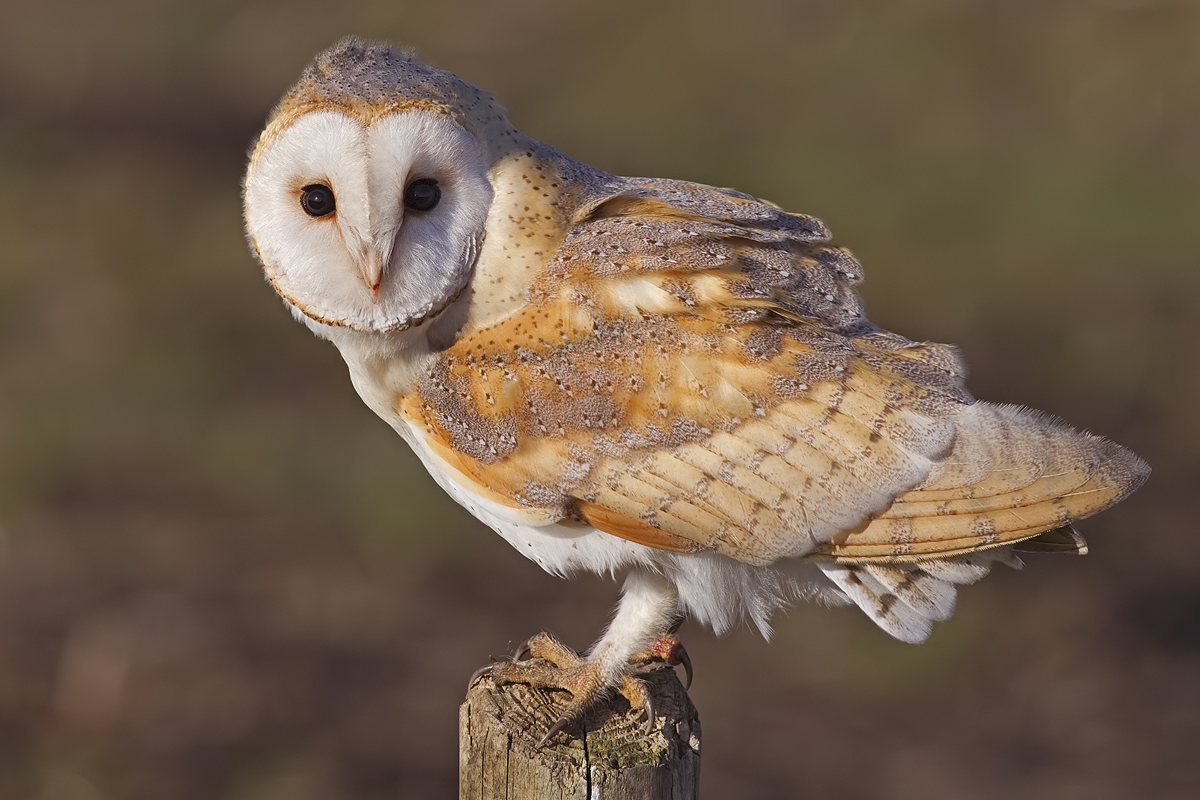
Upperparts are typically a mix of buff and orange-brown, finely speckled with grey and white. Underparts are pure white to buff, often with small dark spots, which can vary geographically. The facial disc is a distinctive heart-shape, pure white to pale buff, bordered by a rufous-brown rim.
- 2
Beak shape
Shape and color of the bill: a key field mark.
Small, hooked, and pale yellowish-horn to ivory in color, largely concealed by facial feathers.
- 3
Eye color
Iris color and any distinctive eye markings.
Small, dark, and beady, set within the facial disc.
- 4
Leg color
Leg and foot color.
Long, feathered legs with pale greyish-brown tarsi and dark grey talons.
- 5
Distinguishing features
Standout features that separate this species.
Heart-shaped white facial disc, dark eyes, pale underparts, and silent, buoyant flight. The lack of ear tufts distinguishes it from many other owl species.
- 6
Juvenile appearance
How young birds differ from adults.
Juveniles resemble adults but may have softer, fluffier plumage and a less defined facial disc. They attain adult plumage after their first molt.
- 7
Seasonal changes
Plumage variation between breeding and non-breeding seasons.
No significant seasonal plumage changes. Plumage remains consistent year-round, though wear and tear can make feathers appear duller before molting.
- 8
Sexual dimorphism
How males and females differ.
Females are typically slightly larger and heavier than males, and often have more numerous and darker spots on their underparts and a richer rufous wash on the chest. Males tend to be whiter underneath with fewer spots.
Key field marks
- Facial Disc. Look for the unmistakable heart-shaped white or pale buff facial disc, which is a key identifier for all Tyto owls.
- Plumage Coloration. Observe the pale, often pure white or buffy underparts, contrasting with the golden-buff and grey mottled upperparts. The amount of spotting on the belly can vary but is a good general indicator.
- Eyes. Note the small, dark, beady eyes set within the pale facial disc. This contrasts with the larger, often yellow eyes of many other owl species.
- Flight Style. Watch for its silent, buoyant, and almost moth-like flight, often low over open fields. It appears to float effortlessly.
- Vocalization. Listen for its distinctive, drawn-out, hissing 'shreeee' or 'kreeee' screech, especially at night.
- Roosting/Nesting Sites. Check old barns, silos, abandoned buildings, tree hollows, and cliff ledges for roosting or nesting individuals, often indicated by whitewash (droppings) or pellets below.
Explore the Barn Owl
Identify birds anywhere
Free on iOS, Android, and Web. Photo & sound identification, full species database, and your personal life list.