
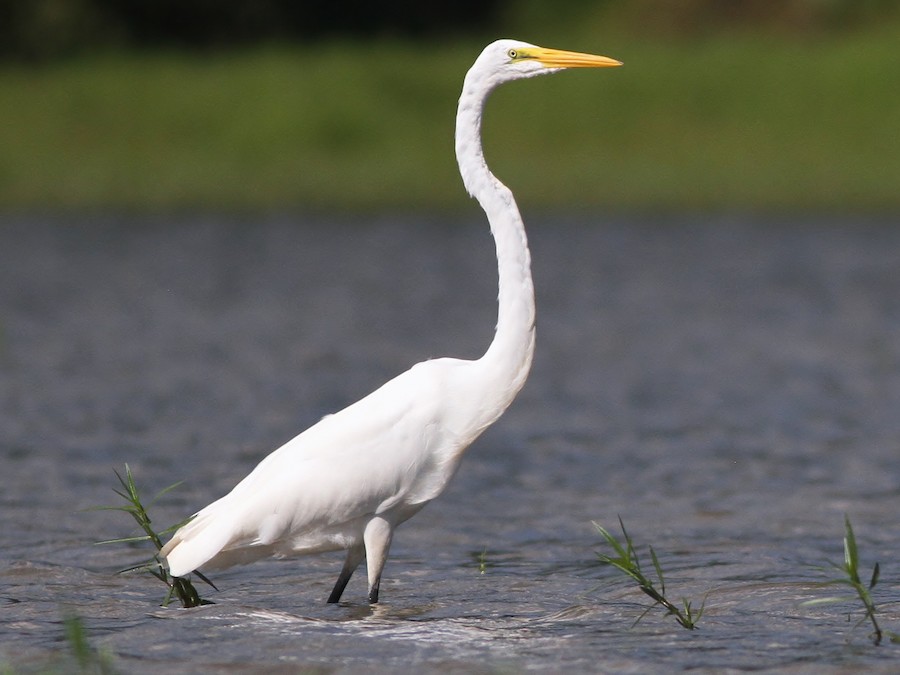
Dove vive Great Egret?
Ardea alba
Visto un uccello? Identificalo all'istante con l'app Birdby
Apri l'appGreat Egret vive in habitat e regioni specifiche. Sapere dove e quando guardare migliora le possibilità di un avvistamento riuscito.
Biomi
Wetlands, marshes, swamps, estuaries, lakes, rivers, ponds, coastal lagoons, flooded fields, and rice paddies.
Areale geografico
Nearly cosmopolitan, found across most of the tropical and warm temperate regions of the world. Present in North and South America, Europe, Africa, Asia, and Australia. In Europe, it is widespread, particularly in southern and eastern regions, expanding its range northward.
Ambienti preferiti
Shallow freshwater or brackish wetlands with abundant fish and amphibian populations, often with emergent vegetation for nesting and roosting. Requires undisturbed areas for breeding colonies.
Fascia altitudinale
Primarily found in lowlands, from sea level up to approximately 2,000 meters (6,500 feet), though typically below 1,000 meters.
Dove guardare
Freshwater Wetlands
Lakes, rivers, ponds, and marshes with shallow water and emergent vegetation are prime locations.
Coastal Areas
Estuaries, tidal flats, salt marshes, and coastal lagoons are also frequently used habitats.
Agricultural Lands
Flooded fields, especially rice paddies, can attract Great Egrets for foraging.
Protected Areas
National parks, wildlife refuges, and nature reserves with suitable wetland habitats are excellent places to find them, particularly during breeding season in heronries.
Consigli sul campo
- Look for still hunters. Great Egrets often stand motionless for long periods, patiently waiting for prey. Scan the edges of water bodies carefully.
- Observe at dawn and dusk. These are often peak foraging times. They may also be seen flying to and from communal roosts.
- Visit breeding colonies. During the breeding season, locate known heronries (often shared with other heron species) for spectacular views of multiple birds with their breeding plumes.
- Use optics. Binoculars or a spotting scope are essential for observing details like bill and lores color, especially to distinguish from similar species.
- Check for movement. While often still, they also wade slowly. Look for subtle movements in shallow water.
Migrazione
Varies geographically. Northern populations are migratory, moving south for the winter. Southern populations are resident or undertake short-distance dispersal. European populations are partially migratory, with many birds moving to southern Europe and Africa, while some remain in milder coastal areas.
Esplora Great Egret
Identifica uccelli ovunque
Gratis su iOS, Android e Web. Identificazione per foto e suono, database completo e la tua lista personale.